
 6 hours ago
3
6 hours ago
3
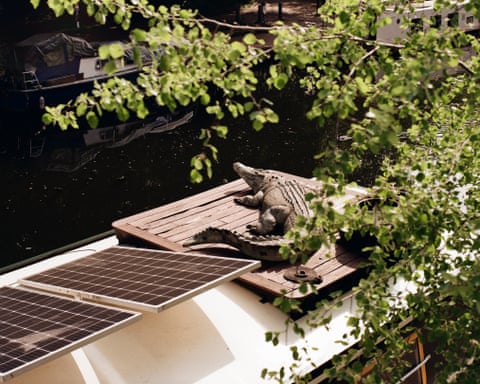
Is that a rooftop crocodilian? Can you cause a forest fire in a matchbox? Things are not always as they seem with the winners of this year’s Lensculture critics’ choice awards
Croc and awe … Along the River Lea Photograph: Mattia CoratoTue 21 Jul 2026 02.00 EDT
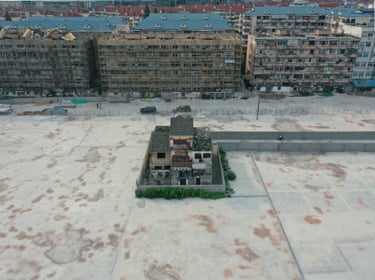
Unseen Landscape by Yangjun Peng (China)
The Lensculture critics’ choice competition is open to photographers of all ages and all levels of experience: no themes, no limitations on genre. As a result the work shows the many different ways that people in cultures around the world are using photography to express themselves, to tell stories, to capture beauty, to document events, to make art and to connect with each other. Here, we show a selection of the personal favourites of the 19 photography experts on this year’s panel. More on the winners of the Lensculture critics’ choice award 2026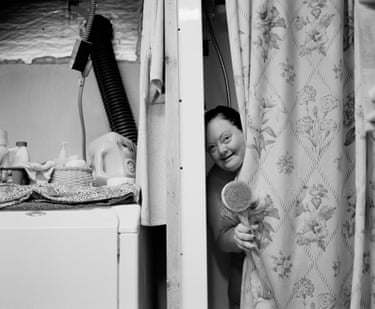
Pictures with Janet by Mark Fitton (US)
This is an ongoing collaborative project between Mark Fitton and his aunt Janet, a 51-year-old woman with Down’s syndrome. The series began when Janet approached her nephew with a desire to make pictures. Over the next decade, what started as a creative impulse evolved into a sustained photographic practice central to their relationship. Making photographs fostered a shared space for exploring ideas and provided Janet with an outlet for self-expression. Pictures with Janet offers a normalisation of disability as a natural part of the human experience.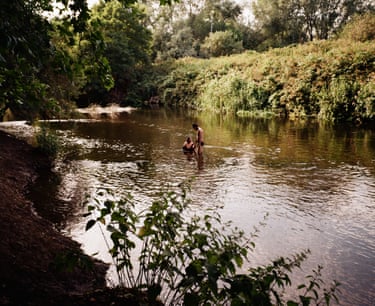
Along the River Lea by Mattia Corato (UK)
‘When I moved to Clapton a few years ago, I did not know much about the River Lea and the surrounding meadows and woods. I started to cycle along the waterways and I discovered a deeply urban nature, dotted with human traces and overgrown spaces. The community of people that live along the riverbanks represents a vibrant part of the river’s modern identity. The river mirrors the cultural diversity and distinctive character of the neighbourhoods of east London through which it flows, representing a peaceful and precious escape from the fast city life.’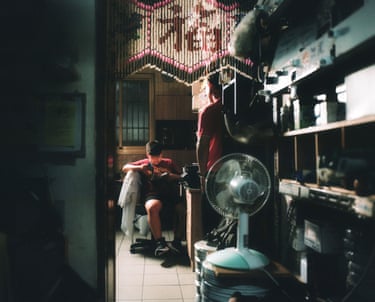
Sonder by Adam Lin (UK)
‘This project explores masculinity through the lens of domesticity, focusing on the relationships between male family members and the spaces and objects that shape their everyday lives. Set between London and Taichung, two culturally distinct cities that have shaped my own identity, Sonder examines how Taiwanese and Asian masculinity is expressed, negotiated and reimagined within the family home. Often coded as a feminine space, the family home contrasts with traditional masculine domains like workplaces or sports fields.’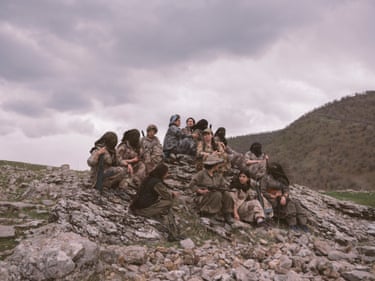
The Last Butterflies by Valentina Sinis (Italy)
These female guerrillas are mostly from Kurdish regions of Iran and belong to the Kurdistan Free Life party (PJAK), with the Women’s Protection Forces (HPJ) forming an all-female unit. They describe themselves as the third butterfly – ‘the last butterflies’ – ready to sacrifice themselves in the name of freedom and Haqiqat (truth), especially significant now the Kurdistan Workers’ party has declared a ceasefire and begun dissolving its armed structures, leaving the HPJ as one of the few remaining armed forces committed to the Kurdish struggle.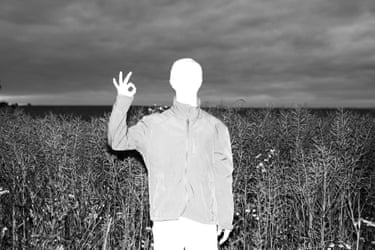
The Quiet Rise by Ashkan Shabani (Germany)
This project examines the growing visibility of neo-Nazi and far-right extremist groups in Germany. Photographed between 2024 and 2025, the images follow these networks across demonstrations, marches, meetings and private gatherings. The Quiet Rise shows how extremist ideology has moved beyond the margins; now, it is openly performed through symbols, language, clothing and coordinated public actions. The work investigates how extremist movements organise, communicate and normalise themselves within contemporary German society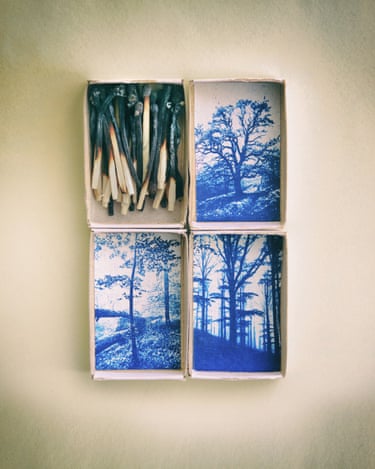
The Burning of Autumn by Mehrdad Fathi (Iran)
‘During the days when the Hyrcanian forests, one of Iran’s oldest ecosystems, were engulfed by wildfires and efforts to contain the flames were ongoing, this body of work took shape. For me, this simultaneity was not merely an external coincidence, but a point of confrontation with the fragility of nature and the role of humans in its preservation or destruction. In this project, the matchbox is used as a small yet metaphorical object; an item that is not inherently guilty, but one that can become a tool for catastrophe’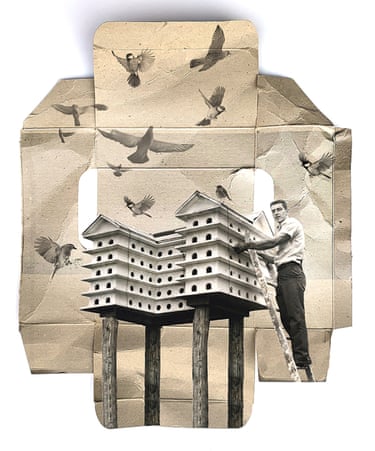
Surprise Inside by Walter Plotnick (US)
‘My photographic collages serve as a metaphor for anticipation – moments when the unknown is being revealed. Pivotal moments when life turns a corner into new and exciting phases, a heightening of our awareness that brings us fully into whatever is coming next. The act of opening the boxes implied in these images releases the energy of what is inside, allowing the contents to take flight. Through the simple act of unfolding, the people and objects that were once hidden and confined are exposed’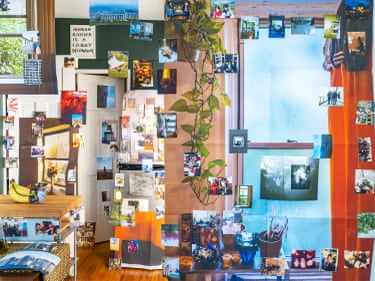
Resident Aliens by Guanyu Xu (US)
‘In this series, I reconstruct the interior space of immigrants into physical photographic installations to explore their personal histories and complex experiences. Through layers of photographs – of the space, belongings, personal photo archives and pictures of places they captured in this world – the project blurs the boundaries between the familiar and foreignness, private and public, belonging and alienation. In the face of rising neo-nationalism and xenophobia, these are topics that resonate across the world’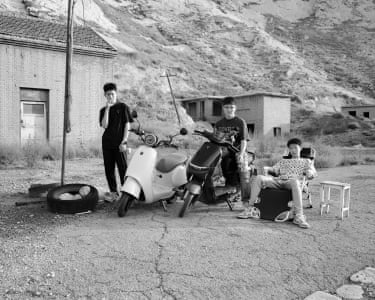
Muted Ember by Yue Sun (China)
‘This project is about younger generations living in China today who are facing challenges as the economy no longer seems able to deliver on the promise of a steadily better future. The project was shot in my hometown, Wuhai, in the province of Inner Mongolia. Now, as the coal resource is depleted, the city’s government is transitioning to a tourism-based economy. I spent two years photographing the city’s outskirts, its failed tourism projects and the people there. Through my images, I hope to convey the uncertainty and change that these youth face’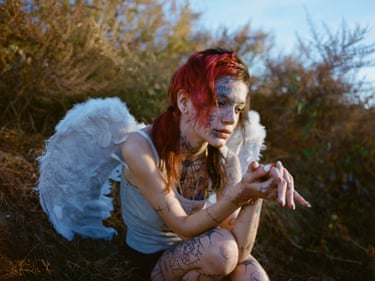
Cry to the Angels by Avery Norman (US)
Jim Casper, editor in chief, Lensculture: ‘Avery Norman has created a story that makes you want to learn more, to connect the dots from image to image. Every aspect of these photographs is expertly controlled and intentional, loaded with details that make the viewing experience more and more rewarding the longer you look. The people seem quite at ease and natural, embodying their roles with very believable attitudes. There is a sly subtext going on here that is hard to pin down – and that tension adds to the mystery and allure of this work’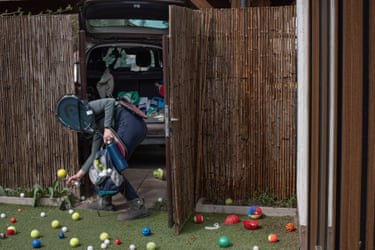
My Mother Doesn’t Work by Olga Steinepreis (Germany)
Fiona Shields, head of photography, the Guardian: ‘This is such a witty and engaging series. It presents a caricature of family life through elaborate, humorous staging, underlining the absurdity of everyday tasks while also making a serious point about how underappreciated parental effort can be’Explore more on these topics






 English (US) ·