
 2 hours ago
5
2 hours ago
5
Anyone who enjoys memes (who doesn’t?) has surely by now accumulated a mental menagerie of internet-famous animals. Mine include: Grumpy Cat, the Ikea monkey, Moo Deng the pygmy hippo, Paul the oracle octopus and – my personal favourite – Roger the hot kangaroo (go on, look him up).
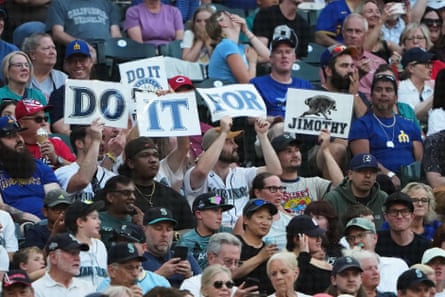
Now we have Jimothy, a raccoon with short spine syndrome. A familiar sight in his neighbourhood in Seattle for his unusually rounded appearance and scuttling movement, Jimothy went viral on Instagram two weeks ago and has since taken over the world. Within weeks of his debut, there has been fan art, merchandise, multiple tattoos, a stadium “theme night” and even a civic ceremony.
Even going by the internet’s longstanding enthusiasm for weird little guys, the scale and suddenness of his ascent has been striking. It’s easy to see why people, brands and even baseball teams have jumped on Jimothy: he’s cute, unproblematic and not at all political. Unlike with Taylor Swift’s wedding, say, or the Coldplay kiss cam couple – to name two recent shared, seismic cultural moments – Jimothy poses no ethical quandary. He’s just a funny- looking racoon. This places him in that rare, dwindling and highly prized category of “stuff that everyone can agree is good”.
Animals have served this purpose online for as long as there’s been social media, and indeed influenced its modern form and function.
It’s been 14 years since Ikea monkey was spotted; you can probably instantly picture him, pensive in his stylish shearling coat. Some of these viral animals’ meanings are still evolving (Doge the side-eyed shiba inu is now some kind of Musk-related currency? I admit I lost the thread there) while others effectively became celebrities: I dropped everything to cover Grumpy Cat’s passing in 2019.
You can tell the story of the internet, and with it the 21st century, through the animals it has rallied around. As a petfluencer pioneer, Grumpy Cat’s merchandising and brand deals were mind-boggling back in 2013; now everything can be monetised. Three years later, in May 2016, the online outpouring that greeted the fatal shooting of Harambe the gorilla at Cincinnati zoo in hindsight signalled a shift to a darker experience of the internet and society.
Now, animal content is not just a pillar of the internet but load-bearing infrastructure, with cute pictures and funny videos providing respite from an angry, anxiety inducing internet.
This is perhaps one reason why recent years have seen non-human main characters emerge at an astonishing pace, with social media monitoring not just the Jimothy situation but also Neil the seal in Tasmania and Punch the infant macaque in Japan. Having gone viral in February, Punch received a reported 2,500 cards for his first birthday this week. When Moo Deng recently turned three, she had a three-day celebration, mass sing-along and “hippo-friendly” cake.
Internet history shows we’ve always come together over animals, but increasingly they feel like our only common ground, because they’re depoliticised, uncomplicated and benign. It’s not just brands: people are hailing Jimothy as “the hero we need right now” (including in song).
after newsletter promotion
The most heartening, human takeaway from Jimothy’s viral moment is that it suggests we really do desire more unity and connection; we just don’t feel comfortable doing so in public, or at scale, on anything other than the most innocuous topic. But as with so many of the nice things periodically enabled by the internet, we’re not even allowed that for long: late on Wednesday, the White House shared a meme showing Jimothy wearing a Maga cap. This is why we can’t have nice things.
This exposes the sad truth of Jimothy, our furry folk hero: he won’t break us out of our online silos. With algorithms distorting our shared reality, he may not even have travelled that far across them. Just now a friend, who spends as much time online as I do, sat down next to me and asked what I was writing about. He met my one-word answer with confusion and an immediate Google search: “Who’s ‘Jimothy’ – and how is he ‘bridging political divides’?”
-
Elle Hunt is a freelance journalist





 English (US) ·