
 2 hours ago
1
2 hours ago
1
This double act of “Lancashire” locations is my final celebration of Britain’s bypassed towns. My native county has dominated my life of late, and one key question asked in these columns has been: can you holiday right at home?
The French author Xavier de Maistre believed you could fit a journey inside a single room. And in Instructions on How to Climb a Staircase the Argentine-French writer Julio Cortázar turned a walk upstairs into a quest. An entire county offers enough adventures to fill a life.
Touring seldom-trod places, I’ve witnessed a lot of regeneration and redevelopment, demolition and disappearance. Preston, my closest city, has a £45m leisure complex, a revamped museum and a new bridge over the River Ribble, with lots more planned. St Helens, my childhood town – proudly in historic Lancashire, but administered as Merseyside, and now part of the Liverpool city region – looks and feels like a drawing board at the moment. But both are changing for the better, if you look beyond the frayed fabric of their townscapes.
Preston
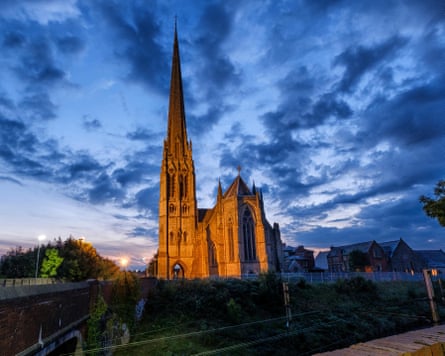
At first, I was struck by the city’s low-slung eastern edges, as if land had been cleared. It was simply that areas have been Americanised – all squat, boxed retail, yawning carparks, and ring roads. It left me feeling flat. But Preston began to grow on me the minute I stood beneath the extraordinary hypodermic spire of St Walburge’s church – the tallest parish church in the UK, designed by Joseph Hansom (of cab fame), and a testament to the strong Roman Catholic presence in “Priest’s Town”. Looking up signifies hope; doing it is primitive cognitive therapy.
Then I discovered the imposing Harris museum and gallery, which reopened after a £19m refurbishment last September. It’s become the place to go for art, local history, textiles, fashion, ceramics, coffee, library books – the ultimate rainy-day or, indeed, heatwave refuge. It’s a regional treasure (and perhaps the Ashmolean and British Museum might like to return the complete Cuerdale hoard, the largest Viking hoard found in England, unearthed beside the River Ribble).
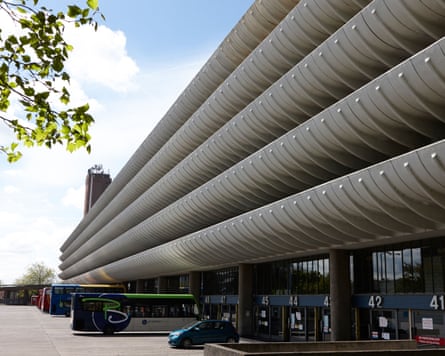
I used the Harris a lot while doing jury service at the crown court and turned my walks to town from the park-and-ride into sightseeing tours. Highlights include the brutalist bus station and Guild Hall, built for an unrealised new town; the monument to the 1842 martyrs gunned down by infantry and coppers during the General Strike; the Victorian market hall and court and Miller Arcade; Winckley Square with its park and Georgian terraces; St Wilfrid’s, St John’s Minster, the Saint Alphonsa Syro-Malabar Cathedral.
Made a city in 2002, Preston has long been a place of power and influence. It’s where the cotton-town trail through east Lancashire begins, geographically and chronologically. Richard Arkwright, father of the factory system and co-creator of the water-powered spinning frame, was born here in 1732. Centenary Mill was built for the empire-spanning textile firm Horrockses, Crewdson & Co – its magnificent chimney was mammon’s shameless challenge to the churches; an annexe off the yard contains a magical emporium of antiques, and fixtures and fittings culled from mouldering mansions.
Industry, one way or another, led to many of Preston’s other inventions. Temperance and teetotalism, spearheaded by the nearby Walton-le-Dale’s Joseph Livesey, son of a clothier, were partly reactions to urban “immorality”. Professional football was what professional workers wanted on Saturdays. Preston North End was a founder member of the English Football League. Deepdale, on the same site since 1875, is one of England’s oldest grounds. Dick, Kerr Ladies, founded in 1917, was one of the first women’s teams.
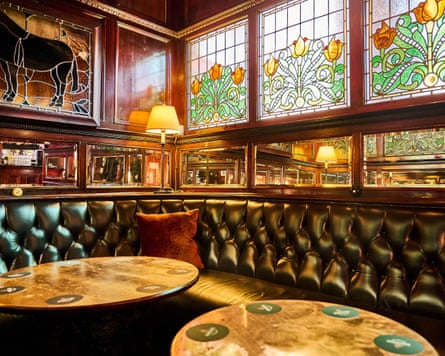
I respect the temperance movement, but love the Black Horse – to me, Preston’s most beautiful old pub, with etched windows, fixed snug-like seating, gorgeous tiling and a rare ceramic bar. Trad spaces have been complemented by new food venues, with the cool Korean restaurant Kimji, authentic Spanish dishes at Pintxos and modern British at Aven.
When they hacked up counties in the 1974 local government overhaul, they accidentally made Preston a future “capital” of sorts. It’s beginning to live up to the billing.
A little bird (an old pigeon outside the Harris, actually) tells me Manchesterism is misnamed. The big central idea, of local authorities exerting control and investing in a place, comes from Preston – with local living standards rising fast as a result. Manchester’s former mayor Andy Burnham has acknowledged this. Prestonism may yet change Britain and the world, all over again.
Things to see and do: walk or cycle the 21-mile Guild Wheel, Tram Bridge, Preston England Temple and the Devil’s House on St Wilfrid Street, Ribble Steam Railway and Museum
St Helens
Till now, I had never been inside St Helens Minster, though I was born nearby. In my defence, it was just the parish church till May of this year, when the name was changed to reflect its role as mother-church of the whole community.
The town began here, with four ancient rural manors ranged around a chapel of ease where wayfarers could rest and pray. Windle, Parr, Sutton, Eccleston; old names that contain even prettier-sounding villages: Clinkham Wood, Thatto Heath, Nutgrove. St Helens was once fields. Then it was shops, pits and workplaces. Now it’s something else.
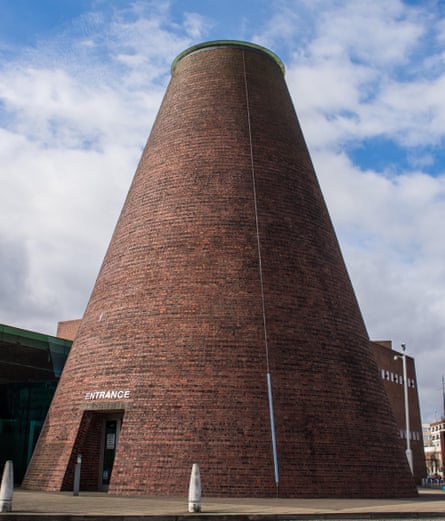
Two big things are unfolding to that end. One looks small on a map but is mightily symbolic. Conservation work is progressing at No 7 Cannington Shaw Bottle Shop. Built in 1886, there were originally nine such shops – factories – making up the largest glass bottle production site in the world. This lovely redbrick circular building, with a classic conical roof, is the sole survivor, occupying a rare patch of rough land beside a big Tesco and Saints’ flashy rugby league arena. Once tons of molten glass were heated here, with glassblowers scooping up gobs to skilfully inflate, shape and place in a mould to create bottles.
On the first Saturday of every month, No 7 Cannington Shaw Bottle Shop now hosts artisan craft markets, with a bar and food stalls. After serving as an air raid shelter and storage depot, the site was abandoned and was only spared demolition by happy accident. John Tabern, director of the project, says: “As an ex-glassman, it’s extremely important to me. I’m proud of St Helens and want people to know its story. But we must monetise it with gigs and markets and all those things.”
The other thing is large on the map, equally important, if less evocative. Following blitz-level demolition, a large area east and south of the town hall is being given a new bus station, homes, offices, a hotel, green spaces, piazzas and “revitalised retail spaces”.
They’re always knocking things down here. But the Gamble building will soon house a smart new library, youth space and offices. This and the town hall are solid examples of redbrick Victoriana. The Beecham’s building, built in 1887, cost a fortune at the time and is topped by a coquettish clock tower. Its founder, Thomas Beecham, began selling laxatives to costive Wiganers; St Helens, like a crucible, allowed his business to flourish. The smart St Helens college faces the former HQ and the marriage of old and new works well.
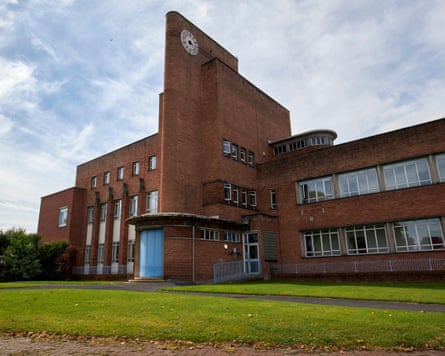
Reflection Court, the old Pilkington’s headquarters on Canal Street, has a streamlined brick facade, influenced by the architecture of the Dutch modernist Willem Marinus Dudok. The former Pilkington’s complex at Alexandra Park on the edge of town was built by modernist architects Jane Drew and Maxwell Fry – who collaborated with Walter Gropius and Le Corbusier. Everything seems to be earmarked for apartment conversions.
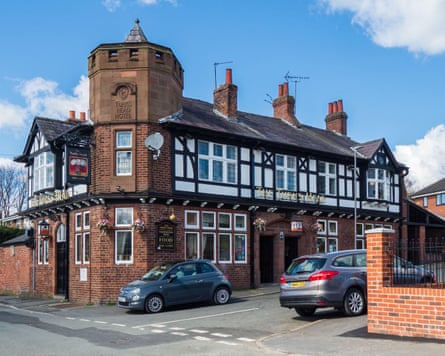
I leave town via the Book Stop community bookstore, which I have “shares” in and where I gave a talk on my recent Lancashire book earlier this year. With no prompting from me, the manager titled it “Don’t Call Us Merseyside”. The newer “Liverpool City Region” is equally unpopular. I pass a church that, as a child, I thought was huge and ominous. Renowned architectural historian Nikolaus Pevsner wasn’t overly keen on St Mary’s Lowe House Catholic church, but I like the competing Byzantine dome and gothic tower. It’s as if the architect couldn’t make up his mind. The brickwork is black – the patina of two centuries of factory fumes. I pass the Turks Head pub, routinely lauded by Camra, and FC St Helens, where the rugby league team played in the 1880s.
Finally, I come to St Helens cemetery and crematorium. I have been here too often this past couple of decades. St Helens was built on furnaces; this one is still busy. I head to an area beyond the neat ranks of modern gravestones, walking on a path that, from the sky, is heart-shaped. In the wooded corner stands St Helens most ancient structure: Windleshaw Chantry, dating from 1415, when this was open countryside.
Beneath it is a large tomb, with a flat tablet full of abbreviated words. Spelled out, they say, “Here lie the remains of Jean Baptiste François Graux de la Bruyere – He was the first Who brought to Perfection A Work of very considerable Magnitude And Importance To the Commercial Interest of the British Nation.” This immigrant from Picardy, who died in 1787, aged 48, is thought to be the hero who brought glass-making to St Helens. I’m sure he’d be pleased that the town is at last celebrating his legacy.
Things to see and do: World of Glass, The Book Stop, North West Museum of Road Transport, the Dream sculpture, Café Laziz








 English (US) ·