
 11 hours ago
3
11 hours ago
3
Like any good proof-of-life photo, it featured that day’s newspaper. After a nearly month-long disappearance, when it was clear that he had been rushed to the hospital but not clear why or in what condition, Mitch McConnell broke his silence, as they say in the tabloids, by releasing a photograph of himself sitting upright in a hospital bed. He wore a pink button-up shirt, and his vacant, lipless mouth seemed to form something meant to resemble a smile. Beside him was his wife, the comparatively pert former Trump transportation secretary Elaine Chao, her coiffed hair as stiff as the couple’s determination. In a statement, McConnell said that he had been hospitalized after a fall, and was being treated for pneumonia.
The picture was meant to put an end to the rampant speculation over whether the senator, aged 84, was dead or not. You would think this would be a simple enough question to answer. If the man himself wasn’t available to clear up the matter, couldn’t someone have held two fingers to the inside of his wrist to check for a pulse, or propped a hand mirror under his nose to see if it fogged? No such luck, apparently. The Kentucky senator was missing for weeks, with no word, his office only releasing vague and repetitive acknowledgements that he had been hospitalized. Public emergency services records indicate that paramedics were called to his Washington address on 14 June, where they administered CPR on an unconscious person who was allegedly suffering a cardiac arrest – one whose identity has been withheld. McConnell had been in a Washington DC area hospital ever since.
Rumors swirled, especially on the Republican side of social media. As McConnell’s office refused to confirm that the senator was awake, the far-right conspiracist influencer and Trump adviser Laura Loomer took it upon herself to speculate, without proof, that McConnell was in a “vegetative state” and “brain dead”.
This seems to have sparked something of a panic. Soon after, Republicans who once worked for McConnell on his leadership team made statements claiming that they had spoken to the senator – though they declined to provide proof, or to have him speak for himself. Suffice it to say, this proved unconvincing to many observers. Last week, Kentucky’s Democratic governor, Andy Beshear, published a letter addressed to McConnell, calling on the disappeared elderly senator to release more information about his health. “Kentuckians have grown increasingly concerned about the current state of your health and well-being, and ability to hold office,” he wrote.
One almost has to feel gratitude to Lindsey Graham, the South Carolina senator, who had the decency to die out in the open, without inflicting a mystery on the public. In McConnell’s case, the circumstances bordered on absurd. Think of it as Schroedinger’s Republican senator: for a while, sealed in his box of secrecy, the former Senate majority leader was both alive and dead.
Now that mystery has been resolved. But the episode reflects a grim reality of US politics: both that many of our elected leaders are far past the age of their greatest competence and stamina, and also that they are so completely inured from the consequences of public opinion that they face no risks for staying in jobs that they’re no longer capable of doing. In other words: many American leaders are so old that it is plausible that they could drop dead at any moment, and so unaccountable that it’s not clear anyone would bother to tell us if they did.
Think, for a moment, of the peculiarities of Mitch McConnell’s job, which he has now occupied for 41 years. He is among the most powerful men in the country; his actions impact the lives of thousands of people he will never meet; without him, those decisions go unmade, or are made by someone who was not elected. He represents Kentucky’s 4.5 million people and is supposed to be one of their voices in the Senate; without him and his colleague Rand Paul, they have no representation. If you’re anything like me, your own job probably involves much less privilege and much less power, and you spend your days doing things that might be more honorable but are undoubtedly of less consequence. Now ask yourself: could you, with your lesser powers and lesser responsibilities, simply disappear from your job for four weeks without notice or explanation? And when you re-emerged from this abandonment, do you think you could claim that you are entitled to remain in that job, even if you can’t perform it, by the simple virtue of being technically alive?
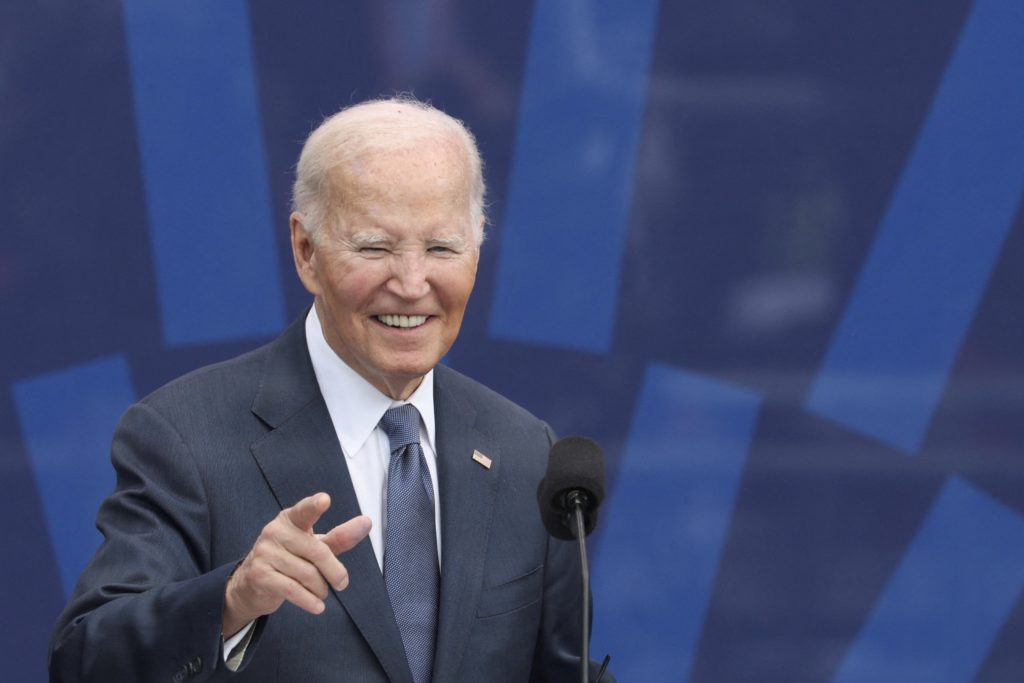
The entitlement is staggering, and so is the reality that McConnell is not even the worst example of what is a thoroughly bipartisan phenomenon. A weak and senescent Dianne Feinstein was wheeled around the Senate in a morbid theater that seemed to border on elder abuse. Joe Biden was so addled and confused in his 2024 debate against Donald Trump that the long-denied reality of his decline finally forced the party to switch out his candidacy for that of Kamala Harris. Chuck Grassley, a sitting Republican senator from Iowa, is 92; his current term will end when he is 94. And of course, there’s Donald Trump: never the sharpest tool in the shed, the president seems increasingly meandering and distracted, frequently appears to fall asleep in his television appearances, and has devoted himself less to policy, which he leaves to unelected advisers, than to the kind of idle vanity projects that might serve to distract a retiree, like pool beautification and home remodeling.
Aging is not a moral failure: if we’re lucky, all of us will do it. But a man who is too old to suffer a fall in his home without needing a month-long hospital stay away from his office is not a man who is capable of being among the 100 most powerful people in our government. What is offensive about the gerontocracy is how transparently it reveals the rot at the core of the American political system, how plainly it demonstrates that our elected leaders do not serve the people, but serve only their own gratification, only their own power. It is not difficult to imagine a different country, one where elected leaders considered themselves public servants, and one where it does not seem unreasonable that the voters – nominally, those politicians’ boss – might want to know where they’ve been. This is not some great fantasy of a utopian model of self-governance. But for those of us here in the sclerotic and collapsing United States, it is apparently out of reach.
-
Moira Donegan is a Guardian US columnist






 English (US) ·