
 4 hours ago
4
4 hours ago
4

Composite: Nicci Dhamu/Guardian Design/Getty Images/Alamy; Courtesy of Nicci Dhamu
Need something brilliant to read this weekend? Here are six of our favourite pieces from the last seven days
1. ‘I thought, I’ve tried everything else, why not give AI a shot?’: the long-lost family reunited by ChatGPT
‘There is a human touch to AI.’ Composite: Nicci Dhamu/Guardian Design
Who would have thought that life would unfold in this way? That ChatGPT would find an article that would lead to an email that would lead to all of this? Technology seems to be in alignment, in the same way that stars can be sometimes. There is a human touch to AI – look what happened.
Avtar spent decades wondering what happened to the mother he never got to know. Thousands of miles away, Nicci was haunted by the story of a half-brother given away before she was born. Jenny Kleeman wrote a remarkable story about how a chatbot brought them together.
2. Nudists, peaceniks and freeloading travellers: the people keeping the Esperanto dream alive
Universal language. Composite: Guardian Design/Getty Images/Alamy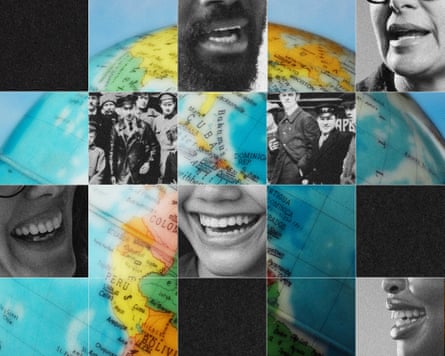
For a satirist or a cynic, Esperantists are easy fodder. Many of its enthusiasts are undeniably eccentric. But Esperanto was once a force in global politics. Before facing heavy persecution during the second world war, it gained serious traction in international labour, anticolonial and anarchist movements. Katie Thornton wrote an illuminating long read about the idealistic movement and the vibrancy of its annual congress. She explored why today’s adherents – many of whom are no strangers to global conflict – still believe that the widespread adoption of a century-and-a-half-old invented language may yet overpower the world’s divisions.
3. ‘It makes you feel you’ve got a really dirty house’: what’s behind the UK’s plagues of flies?
Swatting season. Photograph: cookelma/Getty Images/iStockphoto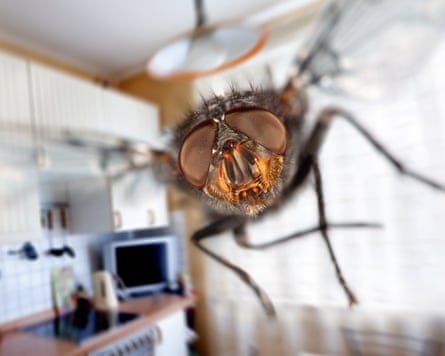
If just one fly buzzing around your head is annoying, imagine what it’s like to be surrounded by clouds of them, week after week. Lucy Knight visited one of Britain’s most insect-plagued neighbourhoods for this fascinating story, which also poses the question: although flies are regarded as disgusting, could they be due a rebrand?
4. Deep breathing: the asthma clinic buried 250 metres into an Armenian salt mine
Going underground. Photograph: Sofia Maria Bergmann/The Guardian
For most people, spending hours deep underground in darkness would seem an odd prescription for better health. Yet every morning, a handful of Armenians descend 250 metres beneath the earth into an active salt mine where they spend six hours in cavernous chambers carved from rock salt, hoping the air below ground will help them breathe more easily.
Pjotr Sauer visited one of the world’s only hospitals in a deep salt mine. The underground clinic’s fate now hangs in the balance after Armenia withdrew state funding, raising broader questions about its role in supporting alternative medicine.
5. ‘I never mentioned it for 25 years. I didn’t want to be a victim of the bomb’: Hiroshima survivor Koko Kondo on horror, anger and forgiveness
Peace activist Koko Kondo. Photograph: Aya Fujioka/The Guardian
On that fateful day in 1945, Kondo was just a baby in her mother’s arms. She talked to Simon Hattenstone about her father’s newly discovered eye-witness account of the aftermath, and why she decided to continue his work as a peace campaigner determined that Hiroshima and Nagasaki will never be repeated. “I don’t want to see any child go through that. That’s why I do not want to see any war in this world. This beautiful world.”
6. Just when you thought it was safe … the shark movie is back for more
Shark Week. Photograph: Discovery Channel/AP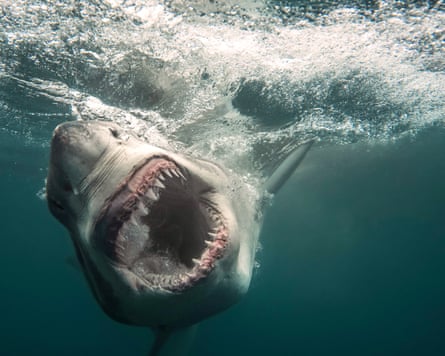
Shark thrillers are often positioned as something akin to an all-natural slasher: horror movies that expand just slightly beyond the bounds of the world we know and into heightened but not completely outlandish territory. They’re the water equivalent of the masked killer stalking around the woods.
Jesse Hassenger wrote about Shark Week, which arrives in an overstuffed period for the film genre – even if nothing will ever rival the greatest of them all.
Explore more on these topics






 English (US) ·