
 4 hours ago
2
4 hours ago
2
It was a warm evening in Fuengirola on the Costa del Sol last year when two Scottish men met a violent end.
The punters of Monaghans seafront bar had barely finished watching the Nations League final on 8 June when a car pulled up outside. A masked gunman emerged and headed to the table of 46-year-old Eddie Lyons Jr, shooting him at point-blank range. The assassin turned the gun on Lyons’ friend, the bar’s owner Ross Monaghan, 43, but it jammed.
Grainy CCTV captured Monaghan racing inside the bar, pursued by the gunman, and falling to the ground, where he was shot three times while crawling on his hands and knees. The shooter fled the scene and, allegedly, the country too.
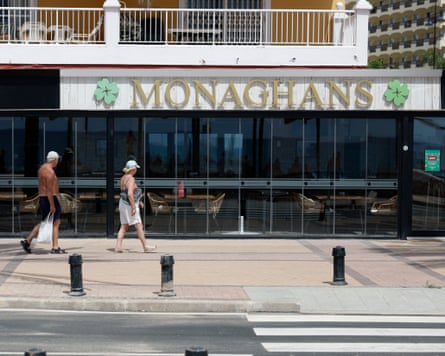
This double murder in a public place was the apex of 25 bloody years of feuding between two Glasgow families and their allies in organised crime: the most untouchable gang in Scotland, the Lyons, and their bitter rivals, the Daniels.
Earlier this month, police said they had noticed a lull in violence coming out of the criminal underworld. Could Scotland’s most deadly criminal war be over?
After a particularly unpleasant six-month spell of attacks and firebombings across “the length and breadth” of Scotland, there had been “a clear and obvious downturn of activity”, Police Scotland said.
“The cause of that downturn was without question multi-factorial, including the resolution of differences within the serious and organised crime community,” the force wrote in an update to the Scottish Police Authority.
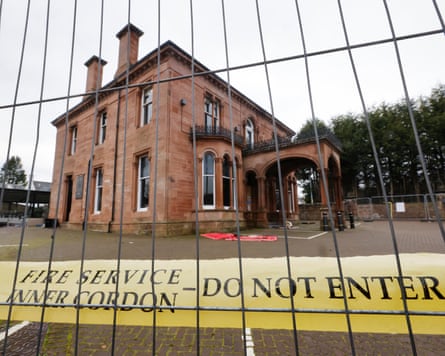
Police Scotland will not comment on whether they intervened to mediate, though this is a known police tactic in other forces.
Karyn McCluskey, the pioneer behind Scotland’s Violence Reduction Unit, said in this case it was more probable that the gangs had changed their approach in response to heat from the police. “If you’re a good organised crime group, you don’t commit violence, because that’s just what brings the police down on you,” she said.
A total of 64 people were arrested in less than a year, the Police Scotland report said, after 84 incidents of violence. Search and arrest warrants recovered seven firearms and “assorted weapons” and more than 90 safeguarding plans were put in place to protect vulnerable members of the public caught up in the feud.
Police were also given a boost when – between March and June 2020 – officers in 13 European countries infiltrated an encrypted communications service called EncroChat used by crime bosses and their subordinates all over the world. The breach allowed police to investigate figures at the very top of the underworld, watching them ordering drugs, weapons or assassinations in real time.
As of 2023, the hack was responsible for 6,558 arrests worldwide, including more than 3,000 in the UK. Defendants are still appearing in front of judges month after month based on evidence gathered from EncroChat.
Origins of the feud
The beginning of this very specific feud can be traced back 25 years and has been compared to the plot of a gangster movie, somewhere between The Godfather and Guy Ritchie’s Lock, Stock and Two Smoking Barrels. In 2001, a £20,000 stash of drugs belonging to the Daniel clan was stolen by associates of the Lyons family, and, it is suspected, the teenage Monaghan and Eddie Lyons Jr.
This did not go down well with the Daniels’ patriarch, Jamie Daniel, a highly territorial scrap-metal dealer who turned a hand to dealing heroin, eventually building a criminal empire. He was a man people knew not to cross. He was linked to beatings and a sniper murder of a rival drug dealer, a crime that is still technically unsolved.
“He had the reputation of being one or two steps ahead of the police and pretty much untouchable,” said a former detective inspector, David Moran, in a 2018 documentary.
It was Kevin “Gerbil” Carroll who did a lot of the dirty work and his increasing hubris began to pour jet fuel on an already roaring fire. Around 2005, amid a spate of gangland killings, Glasgow was labelled the murder capital of the UK. Police were handing out dozens of threat-to-life warnings, known as Osman warnings, to gang members and their families every year.
Gerbil, Jamie Daniel’s son-in-law and chief enforcer, was volatile and notorious for his “alien abduction” kidnap and torture routine, where his victims were often found at night injured and in their underwear claiming to have no memory of what happened to them.
In 2006, in revenge for being shot, he desecrated the grave of the eight-year-old son of Eddie Lyons Sr, which appeared to cross a line.
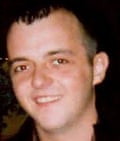
Only weeks later, two Daniel hitmen wearing “old man” rubber masks carried out a daylight ambush at a garage, killing an innocent member of the Lyons family, 21-year-old Michael Lyons.
A judge described the attack as a “cold-blooded, premeditated execution”, before handing out the longest jail terms in Scottish legal history to the men responsible – 32 and 35 years in prison.
Fearing for his life, Eddie Lyons Sr’s son Steven Lyons fled abroad, conducting business from Spain and slowly taking over the job of running the business from his father.
Next came a murder so audacious it would cause reverberations across the Scottish criminal underworld that are still felt to this day. In January 2010, the Daniels’ enforcer Gerbil was shot dead by two masked men in a busy Asda car park in Robroyston. He was in the back of a three-door Audi, and his associates in the front seats ran, leaving him a sitting duck, to be shot 13 times in the head and chest.
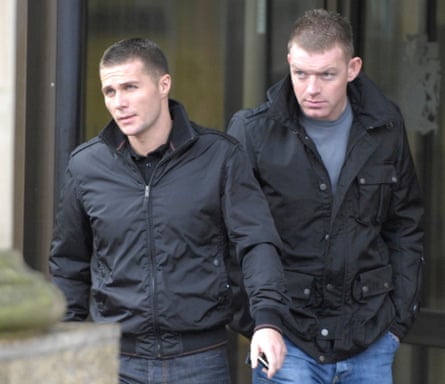
William “Buff” Paterson became the key suspect and during the trial his defence read out a list of 99 people who had reasons to want Gerbil dead. Despite this, he was convicted of the murder.
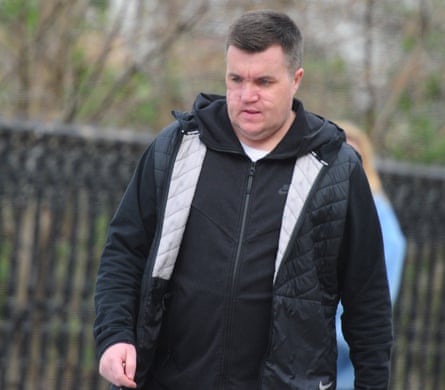
An uneasy successor
When the patriarch Jamie Daniel died of cancer in 2016 without leaving an obvious successor, the role of mob boss fell – somewhat uneasily, some people say – on the shoulders of Jamie’s nephew, Steven “Bonzo” Daniel, who became a primary target for the Lyons family.
Bonzo is known for distinctive scarring across his face, caused by a 2017 machete and meat cleaver attack so severe his jaw detached, his nose was nearly severed and his tongue shredded. It is said that he survived only because the attack happened close to a hospital.
He was taking over at a time of great change in organised crime. Gangs began to enter uncharted territory, moving operations on to the dark web and finding new partnerships overseas.Unlike previous generations who lived relatively modestly and conducted their business semi-privately, these TikTok-friendly gangsters were living outwardly glamorous lifestyles in exotic locations, photographed with Botox, filler and Turkey dental work.
Steven Lyons was expanding the family’s business from Spain and later Dubai, forging links with Ireland’s largest gang, the Kinahans, through his associate, Ross “Miami” McGill. McGill was formerly the head of the Rangers’ “Union Bears” ultra fans and now leads a young Scottish enforcer gang called Tamo Junto (Portuguese slang meaning “we are together”). He is currently on the run.
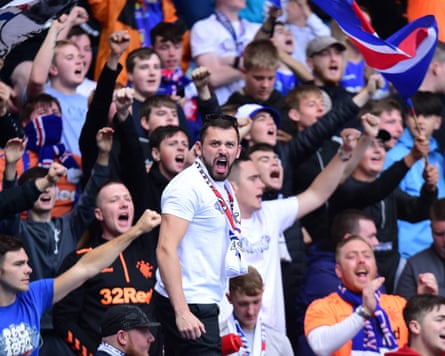
Members of Tamo Junto and a Daniels-aligned group calling themselves the A-Team have posted anonymous TikTok videos each ridiculing the deaths of gangland figures such as Gerbil, Monaghan and Eddie Jr. They have taunted one another with threats in the style of memes as they meted out violence on the ground, filming attacks and firebombings and posting them online.
Steven Lyons’s links to the Kinahan cartel would be his undoing. Detectives working on information gathered during the EncroChat breach targeted the Kinahans’ money manager, Johnny Morrissey, and as a result gathered enough evidence on Steven Lyons to arrest him, his wife and more than a dozen other key figures earlier this year.
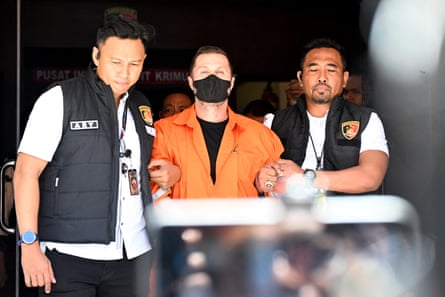
Steven Lyons’s arrest and the assassination in Spain of his brother and Monaghan was a “decapitation” of the powerful Lyons gang, the former Police Scotland superintendent Martin Gallagher said. The downturn in violence observed by police represents a shift in thinking among those who are left.
“Things are just falling into place with what the new normal will be,” Gallagher said. “Although that doesn’t look like crime occurring to the general public – so nobody’s house is being set on fire, no lorry is being driven through somebody’s front door, as has occurred – that means they’re focusing on what they want to do to make money – which is import drugs.”
He added: “There’s still crime happening, it’s just not as obvious and they’re not trying to bump each other off.”
Last week, police found a cocaine stash worth £1.7m in Moodiesburn, a village on the outskirts of Glasgow. A 34-year-old man has been charged.
Graeme Pearson, a former police officer and Labour MSP, said: “The business is too lucrative to suddenly die overnight. It’s like running a seam of gold. If you know the gold’s there, you’ll keep going back to it.”







 English (US) ·