
 1 hour ago
2
1 hour ago
2
In September 2024, Amanda Stanhope watched, transfixed, from her home in Manchester, as the Gisèle Pelicot case made headlines around the world.
“Gisèle’s case was the first time I knew of somebody else who had been raped while they were drugged,” says Stanhope. “I remember feeling: ‘Thank God I’m not alone. There’s one other person in the world that this has happened to.’” Stanhope’s former partner, David Rogerson, was under investigation at the time for raping her while she slept, and filming the abuse. Pelicot’s husband, Dominique, would end up being convicted for drug-facilitated rape and sexual assault (DFSA), along with 50 strangers he had recruited online to abuse his wife.
In Exmouth, Devon, Zoe Watts was also following the Pelicot case. Her ex-husband, the father of her four children, was already serving an 11-year sentence for drugging and raping Watts over a number of years. “I’d never heard of it before and I absolutely did feel as if it was only me,” she says. “Gisèle was like fresh air. You know that feeling when you come into a house and open up all the doors and windows and let the air and the light come through? Well, drug-facilitated rape is one of those doors she opened.”
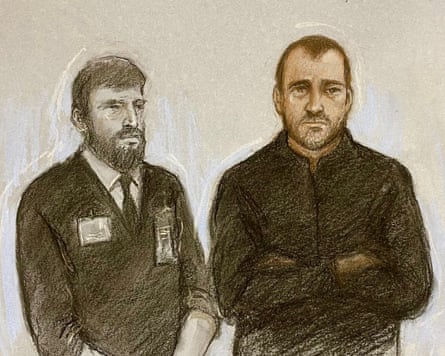
The shock and horror that surrounded the Pelicot case was shot through with the unspoken sense that this was a truly abhorrent one-off, a monstrous anomaly. Stanhope and Watts knew then that it wasn’t – and now we all do. Just last week, in a brief hearing at Northampton crown court, a sobbing man in his 40s pleaded guilty to filming himself and another “person unknown” raping and sexually assaulting his partner as she was allegedly drugged or asleep. These attacks, which took place over an 11-year period, included tying her arms and legs, writing on her body and penetrating her with objects.
Earlier this year, in a separate case, the former Swindon councillor Philip Young pleaded guilty to a string of sexual offences, including multiple counts of rape against his former wife, Joanne Young, over a 13-year period, administering a substance with intent to stupefy and voyeurism. In September, another case will reach court, this one involving 14 men who stand accused of the drugging and raping of one of their wives. The husband is a Stockport man in his 60s. The others, aged from 28 to 73, include a taxi driver, recruitment consultant, paramedic, university technician and delivery driver.
It’s not just in the UK, of course. A case in Germany recently resulted in the conviction of four men on charges relating to the drugging and raping of women. They belonged to a Telegram group called “German driving school for experts”, where members shared footage of their abuse and exchanged tips on how to carry it out using coded words (women were “cars”, sedatives were “fuel” and rape was “driving”).
In the summer of 2023, a pair of German investigative journalists, Isabell Beer and Isabel Ströh, working for Norddeutscher Rundfunk (NDR) and Funk, uncovered another network of men, who were using the porn site Motherless to connect, exchange advice, perform and share videos and photos of DFSA. One had been uploading footage of his sedated wife being raped, abused and sexually assaulted over a period of almost two decades, with no consequences. (“I’m just about to slip the bitch something, lets see what goes down tonight,” he bragged on one thread. “I gave her a few hard slaps in the face and she didn’t even notice,” he said in another.)
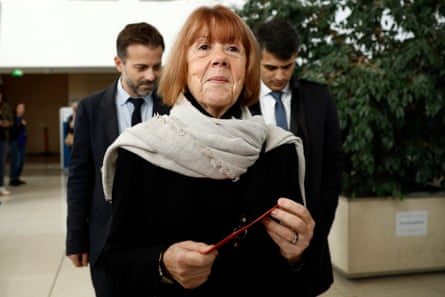
It took repeated pressure from Beer and Ströh before German police took action and intervened. The wife was in shock – she initially thought the police must have come to the wrong address. She’d previously consulted doctors about her long, deep sleeps, but certainly never suspected this. Later she said she “loved and trusted” her husband and that they had been through “thick and thin”. (He died before the case reached trial.)
Further investigation into Motherless and its associated DFSA networks by CNN led to the arrest of a man in Poland. In April this year, Project Medusa was launched – a collaborative effort to dismantle DFSA networks, led by Germany and the UK, with participation from Brazil, Canada, France, Hungary, the Netherlands, Spain, the US and Europol. To date, 156 perpetrators and victims have been identified.
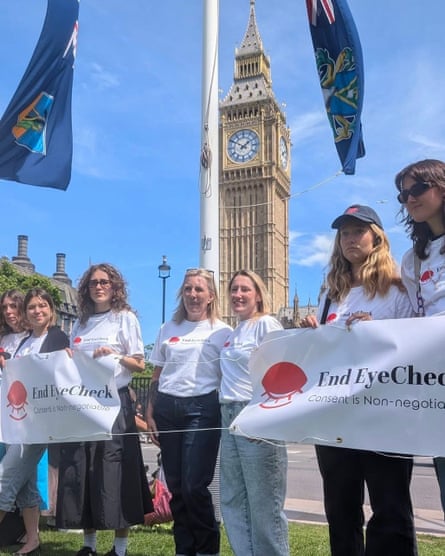
Watts, 43, and Stanhope, 53, were brought together by their involvement in the CNN report. It was this that inspired Watts to found a survivor-led campaign group, the first of its kind. Stanhope has joined as an adviser. Its name, #EndEyeCheck, refers to the practice by perpetrators of pulling open the eyelid of an unconscious victim to ensure they are sedated (something that is frequently filmed and shared online). Watts has set out multiple objectives. These include education on DFSA in schools; an inquiry into its policing and prosecution; greater awareness among medical professionals, in order to spot the signs victims commonly present with; and the banning of “sleep content” from porn sites.
“The first step, though, has to be gathering information,” says Watts. “Until we understand the scale and magnitude, no one is going to act.” There is little reliable data on DFSA – partly because so few cases are detected or prosecuted – but the online survey on the #EndEyeCheck site has now been completed by more than 400 people. Survivors who have contacted the group include women in their early 20s through to the oldest, who is 70, and still recovering from something that happened to her three decades ago.
For these women, finding each other, sharing experiences, picking out patterns and parallels, has been life-changing after so much isolation. “This crime really dissociates you from understanding it, from making sense of it; there are so many gaps,” says Watts. “You can’t sit in a group with other women who have post-traumatic stress disorder (PTSD), because you have no memories. There are no dedicated facilities or support services. It’s a silent crime, just like domestic violence was 20 years ago. Now, with finding other survivors, putting the puzzle together, every day’s a school day.”
Watts met her husband when she was 17 and he was 28. “He was churchgoing and everyone’s friend. He seemed to have integrity and morals,” she says. They went on to marry, had four children and worked together, running a printing business.
Watts only learned he had been adding sedatives to her evening cup of tea, raping her and filming the abuse, because he told her in February 2018. By then, they had been together for 18 years and married for 14. It was a dramatic “confession” after a St Valentine’s Day church service about love, and his delivery downplayed it all. He said he had been putting medication in her tea and “having sex” with her afterwards, and that he’d taken photos because he thought she’d rather he look at her images than other women on porn sites. At the same time, he told her he’d had an affair with her friend when Watts had been pregnant with their second child, years before. The affair was something Watts “understood” immediately, and at first she focused on that. It was six months before she contacted the police to report him for drugging and raping her.
“You don’t understand what you’re hearing, because, until then, I didn’t even know something like this was a possibility,” says Watts. “I’d been telling my daughters how to get home safely at night. I’d not been telling them that the person they’ve already met and fallen in love with might drug and rape them.
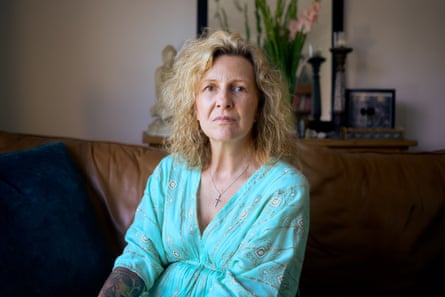
“The experience of DFSA is different to an alleyway rape,” she continues. “Neither is ‘worse’, it’s not a competition, but this type of crime alters your whole reality. It’s not as if I’d experienced an attack, then come back to the safety of my home and comfort of my husband. It’s a nuclear bomb within the family unit. You question every conversation, every interaction. The person you thought you married, that you’d planned to spend the next 60 years with, is not that person any more. The bed you thought was safe, isn’t – it hasn’t ever been.”
For Watts, raising awareness and recognising the signs is vital. “There were definitely signs, but I didn’t understand them,” she says. “One was recurrent urinary infections. Thrush. Tiredness. Nausea. Confusion. Migraines. At one point I thought I had a brain tumour. My body just wasn’t well.” All the survivors they’ve heard from had seen doctors at some point, for issues including memory loss, anxiety, confusion, altered sleeping habits – always with their partner sitting right beside them. In Watts’s case, though, in the years before her husband’s “confession”, various medical professionals had been told directly what was happening. She’d once woken to find her husband “having sex” with her, and he had acted as if he was as shocked and devastated as she was. “He said he didn’t know what he’d done, he wasn’t aware he’d been doing it and he was going to see a doctor,” says Watts. He did see doctors, more than once – Watts went with him to one appointment. He explained that he was having sex with Watts at night, when she was asleep, and he didn’t know why. (He didn’t mention that he was also sedating her.) On one occasion, he was prescribed antidepressants. On another, he was advised to go to bed wearing trousers and a belt.
All this, says Watts, is stark proof of our failure to understand the crime. “He had told people, including non-medical professionals, about this thing he’d been doing and how terrible it was, and how bad he felt,” she says. “He framed it in such a way that none of them deemed it a crime. There is definitely a belief that if you were asleep, if you didn’t say no, or fight back, it doesn’t really matter, it wasn’t rape and where’s the trauma? You’re married to him, sleeping beside him, you had sex with him anyway so it doesn’t count. Pelicot’s case was horrifying because it didn’t ‘just’ involve her husband – there were 50 other men. I honestly believe that if it had ‘just’ been her husband doing this, the world wouldn’t have been following it. No one would have given a shit.”
The police took Watts seriously from the beginning. “In my case, they were brilliant,” she says. “I still wasn’t sure if it was rape. They said: ‘Zoe, you can’t consent if you’re sedated.’” Still, the CPS initially ruled against charging him, despite the evidence in his medical records. Watts challenged the decision. “The CPS were getting 10 emails from me a day,” she says. Even when he was charged, her husband was not deemed a risk to women, and spent four years before the trial living close by. “He was dating, and even got a job in a recovery centre,” she says. “So he was working with vulnerable women and drugs.” In 2022, he was found guilty of rape, assault by penetration and administering a substance to overpower Watts. “Even then, there were people in town taking his side,” she says. “They said: ‘You must really hate him to have done that.’”
Stanhope, a hypnotherapist, was also failed by many of those around her. She met Rogerson in 2019 at a dance event and was swept off her feet. The relationship moved fast. But soon, his jealousy, his rages – always followed by his desperate pleas for forgiveness – were taking a toll. Stanhope was prescribed antidepressants, beta blockers and sleeping pills.
She doesn’t know when Rogerson began raping her while she slept. Looking back, she can see the signs. “I’d wake up and there would be a towel underneath me,” she says. “I thought I’d gone to bed wearing pyjamas, but I wouldn’t be wearing them in the morning.” When she questioned this, Rogerson was always ready with an answer. “It was gaslighting,” she says. “He’d say different things. If I asked why a towel was there, he might say, ‘You put that there, don’t you remember?’ or he’d laugh and say: ‘You’re on so much medication, you’re losing your mind.’ Other times, he’d say: ‘Don’t you remember? You had a great time last night!’ I’d rack my brains to understand it. You live in confusion for years because nothing makes sense.”
Few would leap straight to a conclusion of DFSA. But perhaps more of us should. Instead, Stanhope went back to the doctor. “For two years, I was certain I had Alzheimer’s disease,” she says, “because of the confusion, the memory loss.” Stanhope was referred to a psychiatrist and a neurologist. “It gets worse,” she says. “I was diagnosed with pseudodementia. Basically, it meant that I had all the symptoms of dementia, but it wasn’t real. They suggested it was ‘mental health’.” The “solution” was more medication. “They added antipsychotics, more sedatives, and later, lithium,” she says. “If they’d only asked the right questions: ‘How is your relationship? What are things like at home?’ Maybe it could have been spotted. Instead, I was completely drugged up. It turns out that when the relationship was over, when the abuse stopped, I didn’t need any of the medication. I don’t take anything now.
“So many people have said to me, ‘How could you not know?’” she continues. “It used to make me so angry. Now, I think unless you’ve been in that situation, unless you’re there, taking these medications that are keeping you sedated, and living with a pathological liar, you can’t begin to understand.”
There is something else that kept Stanhope unaware – and she only grasped this recently after hearing it from so many other survivors. “I’ve been asked in the past, ‘Don’t you physically know that you’ve had sex when you wake up?’” she says. “But so many of us have experienced the same thing. Our partners usually made sure they had sex with us earlier in the evening – so when you wake up, knowing you’ve had sex, you think it was that.”
Rogerson’s crimes came to light only because Stanhope sunk so low she wanted to die. She took an overdose and, though Rogerson dialled 999, he raped her unconscious body while waiting for the ambulance. As he was raping her, she came to. Afterwards, Stanhope did manage to end the relationship, but when he threatened to kill himself, she was persuaded to let him sleep on the sofa while he got his life together. Again, she woke to find him raping her. It was then that she went to the police.
Their subsequent investigation found that Rogerson had filmed one assault and posted photos of Stanhope online. In April last year, he was charged with five counts of rape between 2021 and 2023, although none were related to DFSA, as Stanhope had knowingly taken the medications herself. Six weeks later, Rogerson took his own life.
She is still struggling to understand all this. She believes pornography played a large part in what happened. “He was very porn oriented,” she says. “He used to spend endless time with his phone in the bathroom. It’s interesting, because there are things that I’ve been too embarrassed to say until recently. It’s only since connecting with other survivors this year, that we’re realising it was the same for all of us. It’s really strange, but lots of these men, including him, had an attraction to swinging websites and had asked us to try it. I’d said no. The police investigation showed that he’d uploaded my photos to the swinging sites without my knowledge.”
DFSA wasn’t created by pornography. Gwen Seabourne, a professor who specialises in medieval legal history, has highlighted a case from 1292 where a doctor in south-west England drugged and raped a patient. In Victorian Britain, DFSA was the subject of a social outcry, revolving around alcohol, chloroform, and “knockout drops” (a sedative called chloral hydrate), all unregulated and easily available. “There are always going to be men who rape and control and have that entitlement,” says Stanhope. “The oldest survivor to have contacted us experienced it decades ago – but I believe that online porn has accelerated it massively.”
“Sleep content” isn’t hidden in dark corners. In the German investigative report on Motherless, search terms such as “passed out”, “drugged” and “raped” delivered tens of thousands of videos, images and tutorials. Motherless advertises itself as a “moral-free host” – but this content can be found on multiple sites. Previous research on Pornhub and other adult sites has found that one in eight videos on its landing page depicts something illegal.
Is there a kind of emboldening effect at work? What once might have been a fleeting thought, a fantasy, can now, with little effort, become a focus, then a fixation, then, finally, a shared pursuit. “It’s been normalised, it’s almost acceptable,” says Stanhope. “I’ve seen the messages these men share, congratulating and praising each other and giving each other advice. That’s all part of it. It’s not exactly a friendship, but it’s a shared space, a common interest, built around something so appalling. It’s diabolical.”

The Norwegian psychologist Svein Overland has pointed to the similarities between DFSA and the consumption of pornography itself. In some ways, DFSA is pornography’s logical extension. Pornography is “one-way sex”, with no obligation or expectation to please, perform or interact with a partner. DFSA also eliminates a partner by rendering them absent, a passive object, a receptacle. The philosopher Kate Manne, the author of Entitled: How Male Privilege Hurts Women, believes DFSA is more than this. It’s a means to evade shame, a literal “closing her eyes to his disgrace”. Would the sobbing man tried in Northampton crown court last week have written on his wife’s body and tied her up if she could have seen him? DFSA is the “stealing of her consciousness, her vigilance, her wakefulness”, writes Manne. “Drug her; shut her up; and not only silence her but evade the ignominy of her eyes on you.”
Prosecutions are rare and difficult and reliable statistics don’t yet exist. In the crime survey for England and Wales ending March 2025, almost a quarter of victims were either unconscious or asleep during the most recent incident of sexual assault by rape or penetration. “It’s a silent crime that can go undetected for years,” says Watts. “Unless you stumble across the video evidence, what do you have to prove it happened? And even when you do have images, you might be told there’s no criminal case. How can you prove you didn’t consent to them?” For Watts, the answer starts with raising awareness and vigilance – shedding light on the crime and its common patterns.
When it comes to DFSA’s online “communities”, we already have the tools to dismantle them, says Clare McGlynn, a professor of law at Durham University and the author of Exposed: The Rise of Extreme Porn and How We Fight Back. “These acts are clearly criminal offences,” she says. “It’s unlawful to drug and rape someone. It’s also a criminal offence to record and film nonconsensual sexual activity and share it without consent. And it’s also an offence to possess what’s termed ‘extreme pornography’, and that includes videos of rape, whether acted or real.”
Again, the challenge lies in enforcement. “First, the police need to take reports seriously and even when they do investigate, users are so often anonymous, and in different jurisdictions – but those challenges aren’t insurmountable.”
Regulating the platforms that host this material is crucial – and the Online Safety Act (OSA) applies to any platforms with links in the UK, regardless of where they are based. Under the OSA, they are obliged to prevent people from encountering “priority criminal offences” – such as rape and DFSA – and remove it when notified. “We need a regulator that’s swift and proactive,” says McGlynn. “Maybe there should be a precautionary approach that allows a regulator to take something down and then investigate.”
When it comes to pornography platforms, Ofcom has not yet taken any action in relation to content, only age verification. An Ofcom spokesperson responded to questions around regulation of sleep content with the following statement: “The Online Safety Act imposes strict duties on firms to take proactive steps to assess and mitigate the risk of their services being used to commit or facilitate criminal offences. We are actively assessing a number of platforms’ compliance with these duties and have been working closely with law enforcement agencies to receive intelligence and support our evidence gathering. We are determined to act in cases where failings are identified, while also being mindful of the need to protect the integrity of ongoing criminal investigations.”
Watts has chosen not to focus on the fact that images of her being raped by her husband while sedated are probably available online. “It’s a control thing,” she says. “I don’t like the thought of him being in prison and still controlling my feelings, my emotions, and my body. I have to choose where I invest my energy. I’ve already had years of feeling so disabled by what this man has done to me.”
For Watts and Stanhope, recovery is lifelong. “Sleep doesn’t exist for me any more and what do I do? Take sleeping pills?” asks Watts. “I’m what you call a ‘night owl’ and I don’t think I’ll ever get peace with that. There are certain things I don’t feel safe with – even being in the car, I lock myself in. I don’t trust myself in making decisions any more, because I’ve got them so wrong in the past.”
“Nobody realises the impact,” says Stanhope. “It took me a year to even be able to say the word ‘rape’. I’ve been reliving it with PTSD, I’ve had nightmares, flashbacks to those moments I woke up while it was happening. It hits you in waves. You think you’re over something and then you remember something else. I’ve had so much therapy, it’s untrue. I’ve had weekly therapy, trauma EMDR therapy, I’ve had CBT and group therapy. For two years, therapy was my life.”
What has helped her the most has been #EndEyeCheck. “This has been so validating,” she says. “It’s exhausting, but I think it has healed me. I can’t dwell on my own pain when I’m focused on the bigger challenges.”
Finding one another has helped them to see the crime clearly. “For so long, no friend, no doctor, no one I’d spoken to seemed to think I was being raped,” says Watts. “I’d been given the message that he was my husband, I couldn’t remember it, so there was no trauma. A lot of the victims feel like a bit of a fraud.” Meeting Stanhope changed all that. Earlier this year, the two of them attended a lobbying event in parliament. They spent the night before in a shared hotel room.
“I saw Amanda getting ready for bed, and as usual, I couldn’t sleep,” says Watts. “In the middle of the night, I Iooked at her asleep and, bless her, I just thought, ‘How the hell?’ I started crying, because I suddenly saw how vulnerable we are when we are sleeping at night – and how abused we had been. And that must have been me. It hit me on a different level.”
Eventually, Watts got to sleep, and the following day was full-on. She didn’t mention what had happened until the very end. “We were going to get some food and I said: ‘Amanda, I need to tell you that I was crying in the night, because I saw you asleep and I broke.’ She turned to me, and said: ‘It happened to me, too. I thought the same thing.’”
Information and support for anyone affected by rape or sexual abuse issues is available from the following organisations. In the UK, Rape Crisis offers support on 0808 500 2222 in England and Wales, 0808 801 0302 in Scotland, or 0800 0246 991 in Northern Ireland. In the US, Rainn offers support on 800-656-4673. In Australia, support is available at 1800Respect (1800 737 732). Other international helplines can be found at ibiblio.org/rcip/internl.html.






 English (US) ·