
 1 hour ago
2
1 hour ago
2
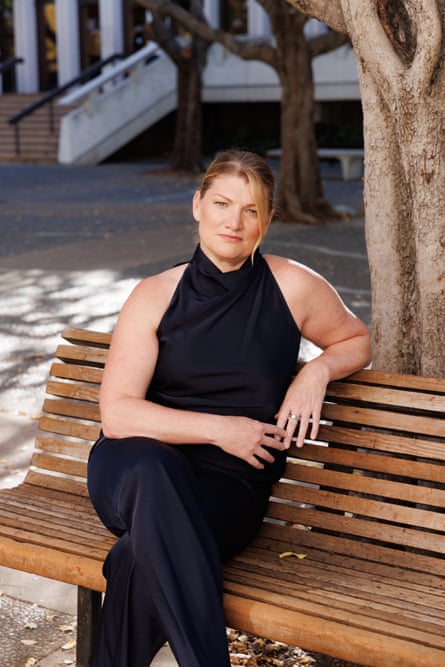
The quickest way to make being online safer for children and teens would be to kick all adult men off the internet, the Canadian psychologist Candice Odgers believes. Men are the biggest perpetrators of sextortion and most likely to spread misinformation, she says.
Odgers is not recommending this as a policy for governments to adopt: “That would be crazy, right? It would be unfair.” But she is on a drive to puncture the prevailing narrative that the best way to address online harms is a social media ban for teenagers.
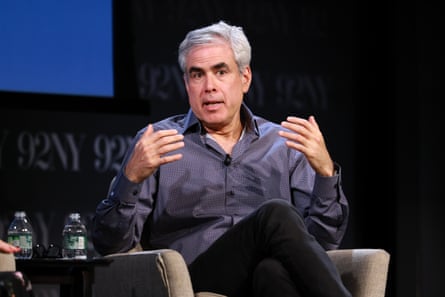
Jonathan Haidt, the social psychologist and bestselling author of The Anxious Generation, last week said he had done “an amazing job” at keeping his children away from social media, telling BBC Radio 4 that his 16-year-old daughter has yet to sign up: “She doesn’t want it. She sees what it did to the other girls.”
By contrast, Odgers, a professor of developmental psychology who has studied adolescent mental health for 25 years, takes a different approach. She gave both her children smartphones when they turned 11 and let her daughter start using Snapchat at the same age.
She thinks politicians and parents are worrying about the wrong things when they point to social media as the primary explanation for a growing mental health crisis among young people. She is frustrated by the global race to remove phones from schools and to ban social media for under-16s. She was “disappointed” when the UK announced it would follow Australia in implementing a ban.

“It’s becoming increasingly clear to me that bans are likely to make things worse, not better,” Odgers says via a video call from her home in Los Angeles, where she teaches at the University of California, Irvine. Odgers’ analysis of the evidence makes her doubtful whether children’s brains have been rewired by mobile phones and certain that there is limited data to support the idea that social media is driving a dip in adolescent mental health.
Odgers and Haidt are scientists who have spent years reading the same studies, yet come to starkly different conclusions. Is it a bit mean of them to haul their teenage children into the spotlight to illustrate their contrasting perspectives on a raging debate on the dangers of digital childhood? Perhaps. But explaining how they incorporate research into their family lives is a convenient shorthand that takes us to the heart of a complex issue.
Haidt’s book has sold more than 2m copies in 44 languages since it was published two years ago. His theory of the “great rewiring of childhood”, the book’s subtitle, has inspired parents to campaign for smartphone bans at schools and helped drive the political debate over age restrictions on social media use.
Despite her impressive academic qualifications, Odgers does not yet have Haidt’s international reach. Her recently released Ted Talk, “What we’re getting wrong about kids and tech”, may help to change that. “Scary stories sell; they always have,” she tells the audience, in a nod to Haidt’s success. “And scary stories are really easy to sell to parents. We’re an anxious lot.” Odgers is cheerful and funny during the talk, reminding her listeners not to be too nostalgic for their own childhoods (she crashed her car and drank excessively as a teen, she says). She points out that teenage pregnancies have plummeted and that modern adolescents are better educated and less violent than their parents’ generation. “Teenagers today are amazing,” she says.
Since 2008, Odgers has been working with 10- to 14-year-olds, extracting information every day from their phones, to analyse how they spend their time and how they are feeling. “With their consent, we look at their school records, we track their sleep data, we look at their step count and we see what they’re doing online,” she tells her Ted audience.
Odgers and Haidt agree that adolescent mental health has deteriorated, but Odgers sees a wide range of causes – the recession, rising adult mental health issues, the Covid pandemic and, in the US, opioid addiction. “The identification of social media as the culprit, as the biggest predictor of all the things that we worry about in our kids, is misleading, because it doesn’t show up that way in the vast majority of studies,” she says. “And it sucks all the air out of the room in terms of thinking about solutions.”
In a review of Haidt’s book in Nature, Odgers wrote: “Hundreds of researchers, myself included, have searched for the kind of large effects suggested by Haidt. Our efforts have produced a mix of no, small and mixed associations.” The available data suggests correlation rather than causation, she argued. Haidt has since told the Guardian: “There’s not a single word that indicates that she read past chapter one.” She tells me that she read the book from cover to cover.
A discussion between Haidt and Odgers hosted by the University of Virginia in October 2024 is well worth watching. “I guess my question to you, Jon, is: why do you think the majority of social scientists actually working in this field disagree with you on this?” says Odgers. Haidt hits back later: “You’d be crazy to let your daughter engage in something that doubles or triples her risk for depression.” “It’s not what that [research] tells you, Jon. You need to stop telling people it doubles or triples your risk,” Odgers replies, but Haidt continues: “Candice, I would just ask you, how old is your daughter and would you have let her on Instagram and Snapchat at the age of 10 or 11?”
Parents around the world have seized on Haidt’s arguments about what he calls the “industrial-scale harm” caused by social media because his thesis chimes with their own worries, says Odgers. “He needs about five seconds to convince people of his argument because it so fits with their priors. I need about 15 minutes,” she says.
She quotes the National Academies of Sciences, Engineering and Medicine in the US, which convened an expert committee and spent a year looking at the impact of social media on child and adolescent health. It concluded: “Contrary to the current cultural narrative that social media is universally harmful to adolescents, the reality is more complicated.” She is not alone in her scepticism about some of the claims being made for the link between children’s mental health and their use of social media, but she notes that “very few people speak up because there is a cost to speaking up”.
“The assumption is that I’m somehow a shill for big tech, which is absurd,” she says. For the past three years, journalists have been making freedom of information requests for her emails, searching in vain for evidence that she has been funded by tech companies (she says her funding comes from US federal agencies and the Canadian Institute for Advanced Research).
Social media, she argues, is “one of the least influential factors” in teen depression and anxiety; girls who are already depressed go on to use social media more, not the other way around, she says. The risk of cyberbullying is another frequently cited justification for a ban, but Odgers points to studies showing that most children who are being bullied online are also being bullied offline. “I’m not saying that cybervictimisation is not harmful, but if we only focus on that, we’re missing a huge part of the picture. The most likely place for children to be harmed is in their home, in schools, in their communities, by people they trust.”
She understands why some politicians want to take a cautious, safety-first approach by limiting access to sites such as Instagram and TikTok. “But don’t make these decisions out of fear, by someone telling you that this is the major cause of suicide and of depression,” she says. “We would not accept this level of evidence for other things that harm our children or take our children’s lives. I would want a paediatric oncologist to correct the record if someone was saying that purple dye was the major cause of childhood leukaemia.”
Although she is accused of being soft on tech companies, Odgers is very clear that the platforms need tighter regulation. “We need to prosecute the perpetrators of online harm and the tech companies that allow horrible things – sextortion, image-based abuse,” she says. “It’s horrific for women and for girls – they are 80% to 90% of the victims and tech company owners and developers are 90% male, so we’ve got this fundamental problem in terms of protecting women and girls online.”
after newsletter promotion
But she believes a ban will not work because teenagers will find ways to get around it. She points to research published last month in the British Medical Journal that found more than 85% of under-16s in Australia who participated in a study said they were still using social media three months after the ban came into force. “They are going to be using it regardless of whether we want them to or not,” says Odgers. “The more we make it a forbidden place to spend time, the less likely they are going to tell us what’s happening in those spaces, the less likely they will be to report harms, the less likely we will be to help them. I am worried that we will make things worse by pushing them into less safe and less regulated spaces.”
Implementing a ban risks politicians and policy “declaring victory in this space when we’ve done very little on the ground to help young people”, she says. She is particularly vexed by the misplaced use of resources spent on special pouches to prevent the devices from being accessed during the school day. She thinks the money could be better spent on funding more teachers and school counsellors and creating safe spaces that are welcoming for teenagers: “All this energy could be going into building things versus banning things.” Restrictions on social media, she adds, do nothing to address the looming question of how to help children develop a healthy relationship with artificial intelligence.
Haidt had a more upbeat take on the Australia research in his Radio 4 interview last week. “Imagine if we could just pass a law and smoking or drinking or drug use would drop by 30% or 40%. Would that be a massive failure or would that be an incredible success?” he asked. Other supporters of a ban argue that it is an important repositioning of attitudes towards digital behaviour and will slowly nudge people towards cutting their time online.
Odgers had a free-range rural childhood in Canada, played a lot of sport and has coached youth basketball. She is not personally very enthusiastic about social media and she says she let her daughter use Snapchat only as a way to support friends who lived far away and had recently been bereaved. But she argues that comparing the use of social media to smoking is unhelpful. “For some people, it’s a support community. Tech isn’t really like tobacco. Its effects go in all directions.”
The UK government announced this week that 16- and 17-year-olds would be encouraged to observe a midnight to 6am social media curfew as part of its drive to protect them from online harms including exhaustion caused by night-time scrolling. Critics have noted that the curfew will not be mandatory. Odgers’ response to concerns about adolescents’ time and energy being wasted by addictive algorithms is that governments should be building better communities and physical spaces for children to play and learn; this could be funded, she says, “with a big old tax on tech”.
These arguments playing out among academics make untangling the science near impossible for parents. In just the past week, the EU pledged to introduce a social media ban, and the Atlantic published an article explaining how the distractions of AI, digital devices and social media had eroded people’s reading habits, heralding the dawn of a “post-literacy” era.
Meanwhile, the Oxford-based youth mental health research initiative BrainWaves set out research showing that the longer young people spend on social media, the stronger the impact it has on their depression and anxiety levels. The same research also highlighted that people who use social media for recreational and social purposes can see a positive impact on their mental health, while those who turn to it with “harmful motivation” will see a negative effect on their wellbeing. It can feel hard to keep up.
“The evidence is really mixed,” says Peter Etchells, a professor of psychology and science communication at Bath Spa University who sits on the UK government’s Expert Panel for Growing Up in an Online World and who wrote a book on the impact of screen time, Unlocked, which came out shortly before Haidt’s. Etchells, speaking in a personal capacity and not as part of the panel, says he is glad that Odgers stepped into a space that many academics are wary of entering.
On Haidt, he says: “It’s wild that one person has been so influential on a global scale. That’s not a criticism of him, but it’s good to take a step back and register that this is just one book that is driving legislation in lots of places. If we really care about getting this right, we need to have some uncomfortable conversations: what if this person is wrong?”
Most scientists agree that tech companies need to be held more accountable; the disagreement lies in finding the most effective route to that, he says: “It’s such a heated debate and it’s very emotive. It often gets reduced to a binary: a social media ban or nothing. It can be frustrating, because the moment you start talking about nuance, people start saying: ‘You must be funded by big tech.’”
Odgers says she wants to hear more from young people. “I’m nobody’s friend in this fight other than kids’. I’m a massive nerd who works with data and kids and I have spent my entire life trying to help and understand them. I’m not leading a movement.”
The global disapproval of teenagers’ use of tech needs to be tempered by an understanding that it is going to remain a core part of their culture, she argues. The culture of blaming parents who allow their children time on devices is also unhelpful. “If I can get 15 minutes with parents and policymakers, the argument becomes much more nuanced. Parents actually breathe a sigh of relief. They can make all the decisions they want to about how tech-free or tech-full they want to be, based on their values and what they want for their family – but they don’t have to make it with this threat that it’s going to lead to horrible outcomes for their children.”
In the UK, the youth suicide charity Papyrus can be contacted on 0800 068 4141 or email pat@papyrus-uk.org, and in the UK and Ireland Samaritans can be contacted on freephone 116 123. In the US, the 988 Suicide & Crisis Lifeline is at 988 or chat for support. In Australia, the crisis support service Lifeline is 13 11 14. Other international helplines can be found at befrienders.org





 English (US) ·