
 1 hour ago
3
1 hour ago
3
The closure of the strait of Hormuz has created conditions for an extreme global biodiversity threat, with scientists warning that thousands of stranded ships could spread invasive marine species across the world’s oceans once they begin sailing again.
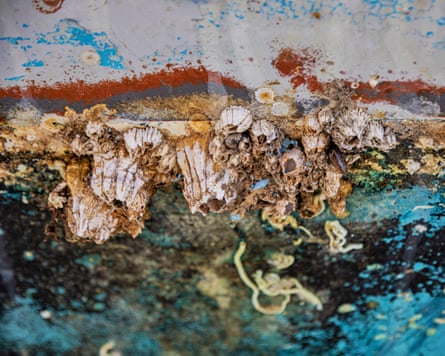
More than 1,500 commercial vessels have been stuck in the Gulf since the strategic waterway closed on 28 February after the outbreak of the US-Israel war on Iran. An international team of marine biologists said that with the stranded ships remaining motionless, their hulls were becoming encrusted with marine life – from microbes and algae to barnacles and other invertebrates – that could hitchhike to ports around the world when trade resumed.
Prof Mario Tamburri, of the University of Maryland Center for Environmental Science and the study’s lead author, said: “If you had to design the worst-case scenario, I don’t know if you could have done it differently. It is a perfect storm.”
The research describes the situation as a potential marine “bio-invasion super-spreader event”, arguing that no previous shipping disruption has involved so many vessels remaining idle for so long.
According to the study, ships normally only remain at anchor in a harbour for one to three days, limiting the growth of organisms on their submerged surfaces. But many vessels trapped in the Gulf have remained stationary for months, allowing dense marine communities to establish themselves.
If thousands of vessels leave carrying barnacles, algae, mussels and other organisms, they could introduce invasive species that outcompete with native wildlife, spread disease and permanently alter marine ecosystems.
“When you move organisms around, they can reduce biodiversity in the regions they invade, cause local extinction of organisms that they displace,” Tamburri said.
Invasive species can also devastate fisheries, clog the cooling systems of power plants and cost billions of dollars a year to manage, he added.
The Gulf is already a hotspot for marine invasions, with previous studies identifying dozens of non-native species introduced largely by commercial shipping. Researchers said the region’s extreme heat and salinity may make the organisms especially resilient.
“They’re pretty hardy. They’re used to extreme environments, high temperatures and high salinities,” Tamburri said. “Those hardy organisms that can often withstand those extreme environments make really good invaders.”
Tamburri said regions with similarly warm, salty conditions were most under threat. “Ports that have very similar environments to the Gulf region are probably the highest risks,” Tamburri said, highlighting India and Singapore among the locations where authorities should be on alert.
The study said individual ships may have already released millions of larvae into Gulf waters during the months-long lay-up. As shipping resumes, organisms in ballast water, as well as parasites and pathogens in “biofouling communities” that colonise ships’ hulls, could spread rapidly through the global shipping network.
Tamburri urged governments and shipping companies to inspect and clean ships before they leave the Gulf wherever possible, while ports expecting arrivals should increase monitoring for invasive species and establish rapid-response plans.
Drawing a comparison with public health, Tamburri said the response should mirror efforts to contain infectious diseases. “Early detection is really important – prevention before you move around is really important,” he said.
“In a lot of ways, it is like tracking flu or Covid. You want to be prepared for it, detect it early. If you find something, manage it right away.”
A spokesperson from the International Maritime Organization said: “Biofouling can be a key vector for transfer of invasive aquatic species. There is a risk of transfer of species if ships are unable to remove fouling before moving out of an area, after a prolonged period of time in one area. The IMO recommends that ship operators follow the IMO biofouling guidelines as far as possible.
“The IMO is currently developing a standalone legally binding instrument for the control and management of ships’ biofouling to minimise the transfer of invasive aquatic species.”
Referring to ecosystems such as coral reefs, seagrass meadows and oyster beds, Tamburri said: “If authorities fail to act, some of the world’s most valuable marine habitats could suffer lasting damage.
“Some of those are likely to be impacted and perhaps damaged beyond repair,” he said, calling it a “super-spreader version” of the way ships already transported invasive species around the world.
While human safety had to remain the priority, Tamburri asked governments not to lose sight of the environmental risks. “Conflicts like this are horrible,” he said. “There’s human suffering, but we can’t ignore the environmental consequences, either.”







 English (US) ·