
 1 hour ago
1
1 hour ago
1
Rebel Wilson’s self-styled brand as a truth teller was put to the test during a fiery defamation feud where rivals called her a bully.
But the Hollywood A-lister, referred to as “very difficult to be around” and “fucking nuts” during an at-times bruising trial, emerged from the federal court battle with the last laugh.
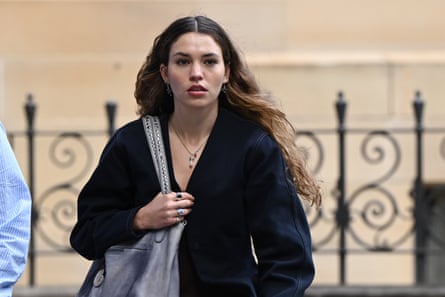
The Pitch Perfect star came under fire while being sued by the Australian actor Charlotte MacInnes, who played the lead role in Wilson’s directorial debut film The Deb.
MacInnes claimed she was defamed by Wilson in four social media posts implying she was a liar and a sellout who walked back a sexual harassment complaint to further her career.
Wilson wrote the young actor confided – and later recanted – she felt uncomfortable when the film’s co-producer Amanda Ghost asked to have a shower and a bath together.
MacInnes denied making a complaint, insisting she had not been uncomfortable when the pair shared a bath in their swimwear after Ghost suffered a medical episode in September 2023.
But in her ruling handed down on Wednesday, Justice Elizabeth Raper found evidence established MacInnes did make a complaint about feeling uncomfortable.
The young actor then walked it back, at least partially because she was concerned about losing control of the situation and wanted to contain it, the judge determined.
She ruled none of the four social media posts were defamatory in a comprehensive win for Wilson.
“This has been a long process and throughout I have tried to stay grounded in my values and what I believed was right,” Wilson wrote upon her victory. “I’m thankful that process has now reached its conclusion.”
Yet the Bridesmaids star did not escape the hotly contested trial without wounds.
For all Wilson’s protestations that she was known as a truth teller, Raper found the actor’s testimony had been untruthful on occasion, self-serving at times and punctuated with exaggeration.
MacInnes’s claims the first-time director would be believed because of her status in the entertainment industry were dismissed.
“It was my impression from all the evidence Ms Wilson is known for being outspoken but not necessarily reliable,” Raper wrote.
MacInnes faced the same scrutiny, with the judge finding she had been less than frank at times and combative when asked to accept reasonable suggestions.
She determined the young actor gave multiple inconsistent accounts of what happened in the Bondi apartment after the medical episode, as had Ghost.
“I have serious misgivings as to the truthfulness of the testimony of each of Ms MacInnes, Ms Ghost and Ms Wilson,” she wrote.
The scathing assessments may have MacInnes questioning why she sued her famous co-star.
But the defamation law expert Prof David Rolph said the case highlighted the risk of defamation litigation.
“People who sue for defamation or become involved in defamation cases don’t know and can’t control what’s going to come out in court,” the University of Sydney law professor said. “Once you start, it’s difficult to control and it’s difficult to stop what may be said about you in court.”
That became abundantly clear for Wilson, who was labelled a bully and a liar during the weeks-long hearing.
The Deb director denied the claims, labelling accusations of private and public bullying as nonsense and insisting she had been a champion of women throughout her 25-year career.
Raper noted she maintained her composure while being repeatedly charged with lying and fabricating evidence during her two-day cross-examination.
The accusations included that Wilson lied about having no involvement in the creation of smear websites attacking Ghost as the “Indian Ghislaine Maxwell” and a sex trafficker.

Raper made no determination of the contentious websites that loomed large during the trial, nor MacInnes’s allegation that Wilson was involved in a hack that resulted in a nude photo of hers being leaked.
Ultimately, the judge found, even if one of the posts had been defamatory, she could not be satisfied MacInnes had shown that she suffered serious harm.
The four posts had been visible to Wilson’s 11 million followers for 24 hours.
“The ordinary reasonable reader would have scrolled through the post relatively quickly and his or her reaction would have been impressionistic and fleeting,” she said.
The threshold of serious harm is a relatively new requirement yet to be tested in the country’s highest court, Rolph noted.
“The courts haven’t yet worked out precisely how to approach this issue and what’s required of it,” he said.
“It wouldn’t surprise me if a ground of appeal is raised in relation to serious harm because of the novelty of the issues and the novelty of the law.”
MacInnes indicated her intention to appeal against the decision, which has left her holding a hefty bill for the costs incurred by Wilson during the legal fight.
Rolph suggested such a high-profile loss may have a chilling effect on others considering litigation.
With a possible appeal looming, neither Wilson nor MacInnes can be said to have escaped without a scratch.
The actors began their relationship full of mutual admiration, working together on a film that was to elevate both of their careers.
But ended it on opposite sides of a stale Sydney courtroom, slinging accusations of lying and greed.
As Wilson wrote in her affidavit to the court: “Unfortunately, what started as a dream has turned out to be a nightmare.”








 English (US) ·