
 1 hour ago
3
1 hour ago
3
As Nicole Johnson prepared to compete in the Alaska sports arena, she visualized propelling into the air and kicking the ball with both of her feet simultaneously. The Iñupiaq athlete was partaking in the Arctic game of two-foot high kick, long practiced by her community of northern Alaska Natives. When she kicked the ball made of seal skin that dangled from a kickstand, the crowd erupted in cheers. That day in July 1989 at the World Eskimo Indian Olympics (WEIO), Johnson set the women’s world record in the sport by striking the target at 6ft 6in.
For this year’s event, at age 57, she will compete in the dene stick pull, where she and another participant will hold on to the center of a stick covered in grease and attempt to wrest the object from their opponent.
An annual multiday sporting event held in Fairbanks, Alaska – held this year from 15 to 18 July – WEIO draws hundreds of Indigenous athletes who play traditional games that originated from Alaska, Greenland, Siberia and Canada. The two-foot high kick, for instance, is rooted in the long-distance communication methods developed by Johnson’s ancestors. Historically, messengers who were too far away to be heard would kick both feet in the air to signal to villagers that hunters had successfully caught a whale.
Johnson, who’s on the board of governors and serves as head official of the WEIO sporting events, has competed at WEIO for most of her life.
“I am going to be doing [Arctic sports] until I’m in my walker or wheelchair or until I can’t do it any more,” Johnson said. “And when I can’t do it, I’m still gonna be sitting on the sidelines cheering everybody on, offering my coaching advice.”
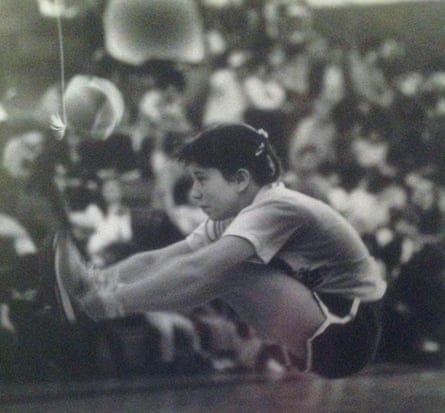
Traditional Alaska Native games, or Arctic sports, that have been practiced for hundreds of years were originally developed to build survival skills, endurance and strength needed for daily life in the tundra. Though people rarely use the techniques for survival skills in the modern day, Alaska Natives carry on the tradition by participating in the annual games at WEIO, which also include regalia contests, traditional dancing, and arts and crafts.
Athletes who compete must be Indigenous and at least 12 years old; some people participate into their 70s. The top three winners in each event are awarded medals, though athletes say that they participate for the camaraderie. Last year, WEIO sold nearly 3,000 tickets to attendees. The event is a celebration of traditional culture that was long suppressed: Indigenous communities surreptitiously practiced Arctic games during colonization and the missionary systems of the 19th and early 20th centuries. In recent decades, Arctic games have seen a resurgence through annual sporting events, as well as coaching in schools and community centers.
Kyle Worl, a Tlingit, Yup’ik and Deg Hit’an Athabascan wellness administrator and coach, is on a mission to pass down the traditions to the youth.
“I’m part of a long unbroken passage of knowledge,” Worl, 35, said. “There have been many challenging points in our people’s history where things were almost taken from us: our language, our culture. It really is this generation’s responsibility to be intentional and put forth a good effort to keep it going.”
Keeping traditions in private
The games were originally practiced by small communities in the Arctic circumpolar region after a successful hunting season or to celebrate special occasions for generations. Historically, event organizers would provide housing and food for visitors from other villages.
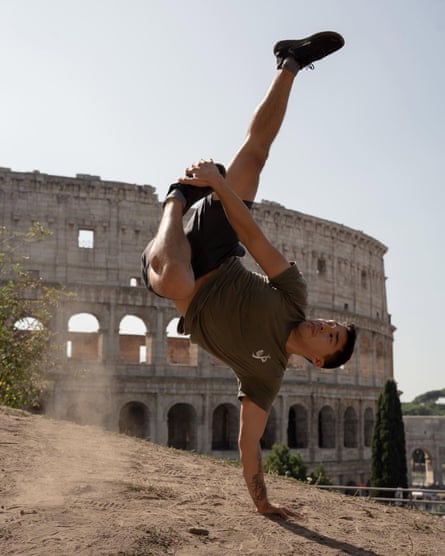
When the US bought Alaska from Russia in 1867, federal policies were developed to force Indigenous populations to assimilate to western values. After the US Organic Act of 1884, which created government systems in Alaska, American Christian missionary schools proliferated throughout the region as a primary tool for assimilation. Children were forcibly removed from their families and punished for speaking their native language. Traditional hunting and fishing methods were also forbidden.
“The games were basic training for hunting and fishing,” said Rosita Worl, president of the non-profit Sealaska Heritage Institute, who is also Kyle’s grandmother and a Tlingit anthropologist. “If you want to eliminate hunting and fishing, then you get rid of the training.”
Rosita experienced the repressive nature of boarding schools at six years old in the 1940s. She was kidnapped by missionaries and brought to a Presbyterian school where she faced physical abuse for several years.
Indigenous people would honor their traditions in private. “We had to practice our ceremonies away from where there were white people,” Rosita said. When they encountered non-Indigenous people while they were practicing their language or traditional games, “we’d stop what we’re doing and run around and act like we’re playing.”
Assimilation policies began to wane in the 1960s, after pressure from Alaska Native activists. In 1961, the first WEIO was held in Fairbanks to ensure that the games were passed down to the next generation.
A resurgence of the games solidified in the 1970s, after the 1971 Alaska Native Claims Settlement Act gave Indigenous people title to 44m acres of land and more political power, said Rosita. She added: “At that time you really see the emergence of Native culture coming out into the open.”
‘Lit a fire in me’
Now, Indigenous people are taught Alaska Native games by their families, in schools and at community centers.
Amber Vaska, WEIO’s board president and a longtime athlete, learned to play the games through a program at her school in Aniak, Alaska, at 10 years old. In seventh grade, she began participating in the statewide Native Youth Olympics, an annual Arctic sports event for Indigenous youth held in Anchorage.
The games have helped Vaska, who is Yup’ik from southern Alaska, feel connected to her heritage. “I don’t do a lot of sewing, and I haven’t learned my language, but I have learned the game,” Vaska, 37, said. “It’s my way that I can share and celebrate our culture and to continue it into the future to the next generation.”
Over the past few months, Vaska has trained for the various games that she’ll compete in at this year’s WEIO, including kneel jump – a test of agility where athletes kneel on their knees with their feet flat on the floor and jump as far as they can. Historically, the kneel jump helped ice fishers practice quickly getting on to their feet if the ice broke. Her training regimen has involved weightlifting, plyometrics (AKA jump training), and running.
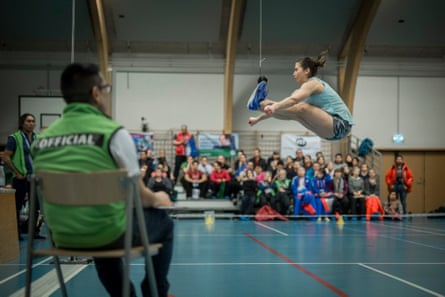
Kyle, who has competed in WEIO since 2011, has carried the communal philosophy into his coaching of youth. Nearly a decade ago, he piloted an Alaska Native games program at a school in Juneau, Alaska, and now brings youth from southern Alaska to compete in WEIO. He became passionate about the sport as a teenager when he demonstrated the games for visitors at the Alaska Native Heritage Center, an Anchorage-based cultural institution. At the time, he overheard a teacher in his high school tell a fellow athlete that the games weren’t a legitimate sport.
“That lit a fire in me early on,” Kyle said. “I was like: ‘I must show the world, I must show people that I’m a real athlete, this is a real sport.’ I wanted to be the best athlete I could be, so that no one would question me.”
Now wherever he travels around the world, Kyle practices the games in public spaces to build exposure. He’s also invited Indigenous communities from Mexico and New Zealand to compete in Arctic sports events. As a board member of North American Indigenous Games, a multisport event for Native youth held in Canada, Kyle has helped introduce Arctic sports to the 2028 competitions.
He will compete in multiple events in WEIO this year, including the knuckle hop, where athletes start in a push-up position on their knuckles and toes and hop across the floor to mimic a seal. Historically, villagers hunted seals by wearing their hide and using the knuckle hop to sneak up to the marine mammals without scaring them away. Along with weight lifting and running, Kyle’s training involves practicing the knuckle hop with gloves on so that he doesn’t damage his hands before the competition.
In the future, he hopes to demonstrate Arctic sports at the 2028 Olympics in Los Angeles, California. He sees the games as a tool to build awareness of Indigenous people in the Arctic, particularly as the region is on the frontline of the climate crisis.
“I don’t want our culture to be a relic of the past in museums. It’s something alive, and it can live beyond its original context,” Kyle Worl said. “Our own Indigenous sport, language and culture, are part of the fabric of what makes us human and diverse. It’s important that our culture, our voices are recognized on that world stage as well.







 English (US) ·