
 5 hours ago
3
5 hours ago
3
US issues new guidance on alcohol consumption
Fox News medical contributor Dr. Nicole Saphier joins 'Fox & Friends Weekend' to weigh in on new dietary guidance surrounding alcohol consumption as the overall drinking rate hits a new low.
NEWYou can now listen to Fox News articles!
A clip from Ed Sheeran's appearance on "The Louis Theroux Podcast" has recently resurfaced on social media, sparking renewed debate over differences between British and American attitudes toward alcohol.
"Americans call something ‘alcoholism’ that Brits simply call ‘culture.’ Maybe one or two pints at the end of a workday," the singer said during the 2025 podcast.
"On a Friday you’ll have 6 pints and a bottle of wine. It’s not alcoholism to drink every day here … It’s just the culture."
NIGHTLY GLASS OF WINE MAY NOT BE AS HARMLESS AS MANY PEOPLE THINK, STUDY SUGGESTS
Americans and Britons consume similar amounts of alcohol overall, with the average adult drinking about 9.7 liters of pure alcohol per year, according to the World Health Organization.
Drinking patterns — such as how often people drink, how much they consume in a single sitting and social attitudes toward alcohol — can differ even when overall consumption is similar, according to public health experts.
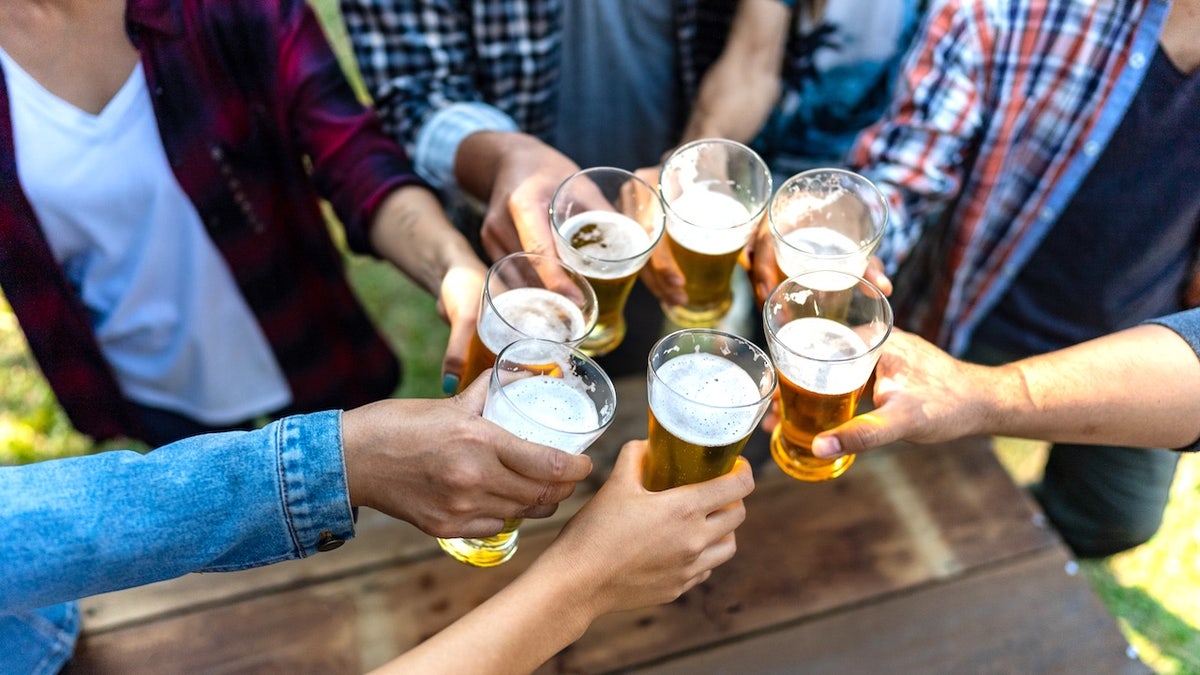
Americans and Britons consume similar amounts of alcohol overall, with the average adult drinking about 9.7 liters of pure alcohol per year, according to the World Health Organization. (iStock)
In the U.K., pubs are commonly regarded as community gathering places, with alcohol representing a routine part of social life for many people. In the U.S., attitudes toward drinking tend to vary more widely by region, religion and social norms, experts say.
Jessica Steinman, chief clinical officer at No Matter What Recovery in Los Angeles, noted that British and American cultures have always been very different, and that includes alcohol consumption.
DRINKING ALCOHOL MAY INFLUENCE CRAVINGS FOR CERTAIN FOODS IN A SURPRISING WAY, STUDY SUGGESTS
"Americans can’t legally drink until 21, and it is frowned upon to do so before that age," she told Fox News Digital. "In England, there is less stigma and restrictions around alcohol, which changes how people view it and drink it."
When does drinking become alcohol use disorder?
"Regardless of where anyone lives and regardless of their culture, when alcohol or substances start negatively affecting someone’s life or when someone cannot control the levels of alcohol they drink, then it is a problem," Steinman said.
"When drinking gets in the way of a job, school or relationships — or when people start numbing out from difficult feelings or escaping their problems through alcohol — it isn’t just cultural drinking, it’s an addiction."

In the U.S., attitudes toward drinking tend to vary more widely by region, religion and social norms, experts say. (iStock)
Steinman said she's concerned that people with alcohol use disorder may dismiss or justify their drinking as a normal part of their local culture, making them less likely to recognize it as a problem and seek help.
Chris Tuell, Ed.D., clinical director of addiction services at Lindner Center of HOPE and associate professor at the University of Cincinnati College of Medicine, reiterated that Sheeran’s comments highlight how culture influences people’s perceptions of alcohol.
TEST YOURSELF WITH OUR LATEST LIFESTYLE QUIZ
"What is considered ‘normal’ in one country may seem excessive in another," he told Fox News Digital. "In parts of the U.K., Ireland, Germany, Australia or even parts of the U.S., drinking is woven into sporting events, celebrations, work gatherings and family traditions."
Tuell noted, however, that culture does not determine whether someone has alcohol use disorder (AUD).
"When drinking gets in the way of a job, school or relationships ... it isn’t just cultural drinking, it’s an addiction."
"The fact that something is common does not automatically make it healthy — the same principle applies to alcohol," he told Fox News Digital. "A person may live in a culture where drinking every evening is expected. Another person may rarely drink because their culture discourages alcohol altogether. Neither person's cultural background alone tells us whether alcohol is helping or hurting them."
Two people can drink exactly the same amount each week while having completely different outcomes, according to Tuell.

Whether someone drinks every day, only on weekends or only at celebrations is only part of the picture, an expert noted. (iStock)
"One person may drink socially, maintain healthy relationships, perform well at work and easily choose not to drink when needed," he said. "Another person drinking the exact same amount may experience worsening anxiety, strained relationships, poor sleep, financial problems, declining health and an inability to stop."
Whether someone drinks every day, only on weekends or only at celebrations is only part of the picture, the expert noted.
CLICK HERE TO SIGN UP FOR OUR HEALTH NEWSLETTER
Warning signs to watch for
Tuell recommends paying close attention to the following important patterns that can potentially indicate alcohol use disorder.
- Having difficulty controlling drinking
- Drinking more than intended
- Spending increasing amounts of time obtaining or recovering from alcohol
- Continuing to drink despite relationship problems
- Continuing to drink despite medical problems
- Continuing to drink despite worsening depression or anxiety
- Giving up important activities because of drinking
- Drinking in dangerous situations
- Developing a higher tolerance to alcohol
- Experiencing withdrawal symptoms
CLICK HERE FOR MORE HEALTH STORIES
"Ultimately, AUD is measured less by how much a person drinks and more by how much alcohol has begun to take from their life," Tuell said.
"That perspective moves us beyond stereotypes and cultural expectations. It replaces judgment with curiosity, stigma with understanding, and shame with the opportunity for honest self-reflection and meaningful change."

Anyone experiencing symptoms of alcohol use disorder should consult a healthcare provider for evaluation and guidance. (iStock)
One of the greatest barriers to recognizing a drinking problem is comparison, according to the expert — as people might say things like "everyone I know drinks this much" or "my family drinks every day."
CLICK HERE TO DOWNLOAD THE FOX NEWS APP
"Those comparisons can be misleading," Tuell said. "Imagine someone saying, ‘everyone in my family has high blood pressure.’ That doesn't make untreated hypertension healthy. Likewise, widespread drinking doesn't eliminate the possibility that alcohol is causing harm."
Anyone experiencing symptoms of alcohol use disorder should consult a healthcare provider for evaluation and guidance.
Melissa Rudy is senior health editor and a member of the lifestyle team at Fox News Digital. Story tips can be sent to melissa.rudy@fox.com.







 English (US) ·