
 1 hour ago
1
1 hour ago
1
What is the story behind John Wood’s photographs? Some might guess that his portraits, which capture male subjects in various states of undress, very often wearing black leather jackets, gloves and boots, were taken in New York in the era of BDSM photographer Robert Mapplethorpe and Studio 54. Or maybe they were created in a very different kind of darkroom – the type of spaces that inspired the homoerotic imagery of the artist Tom of Finland? If you were given a hundred tries, you’d probably never guess that these erotic, intimate, kinky portraits were taken in a converted attic in the West End of Glasgow, unbeknown to the world (and the neighbours) for decades.
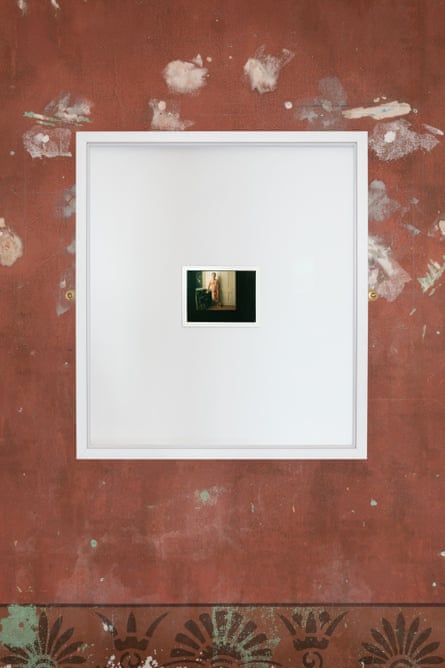
The story of Wood himself is equally unusual. At 79, he is showcasing his first ever solo show at Celine gallery in Glasgow. To say it has been a long time coming would be an understatement: Wood has been making photographs since his teens, when he began teaching himself by studying the images in magazines. The portraits in the show span a 20-year period, from ‘Cal’, a small Polaroid of a man standing nude next to a white doorway, taken in 1982, to ‘June 2002’, a gelatin silver print of an unnamed man clad in a leather waistcoat, while a black leather military-style cap and a cigarette obscure most of his face.
When we talk, Wood is far more modest about his images. He describes them as “collaborative photographs”, frequently mentioning that he was happy to follow the lead of his subjects. “I think they were probably restricted by their very tight leather clothes, so they couldn’t move very much,” he says. “So my input regarding the posing was pretty minimal. It was mostly the lighting and the look of the photograph itself.” This collective approach is why he frequently printed his work in duplicate, keeping one set and giving the other to his sitter.
Visually, the similarities with Mapplethorpe are obvious. Both photographers capture a sense of masculine peacocking that is integral to the gay leather scene, where the black garments are part of a maschismo-fuelled drag act. While taking the photographs, Wood was struck by how “confident they all seemed” in leather. “They’ve got all these fantastic clothes that they never get a chance to wear, really, except maybe going to a particular leather bar at the odd weekend,” he says. “So I think it gave them a space to show off.” And considering the context that the images were taken in – male homosexuality was only decriminalised in Scotland (for over 21-year-olds) in 1981, the same year that the first cases of Aids were diagnosed in the UK – it is easy to understand how freeing it must have been for these men to be given a space in which to be confident, strong and sensual.
One key difference from Mapplethorpe is that, unlike the American photographer, Wood was not a part of the leather subculture that many of his photographs document. “It’s funny because I’m not into leather at all. It’s just not my scene,” he says, explaining that he was introduced to Glasgow’s leather scene by a former partner. Most of the subjects are connected to this partner in one way or another. “He had a gay life before me and he’d kept up with these people who were all part of this leather crowd,” Wood says. “They kept nagging me to photograph them, so I thought: ‘Why not?’”
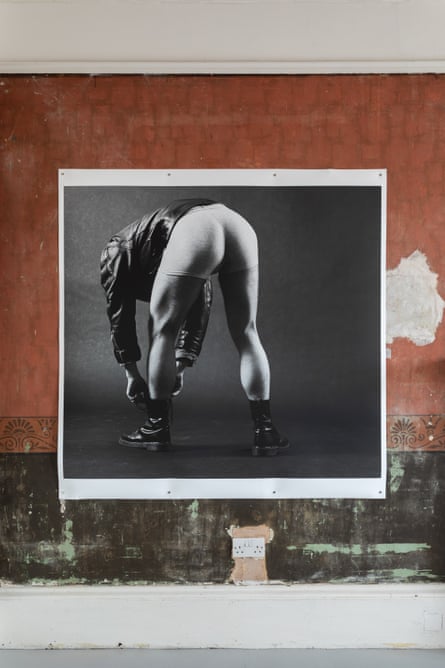
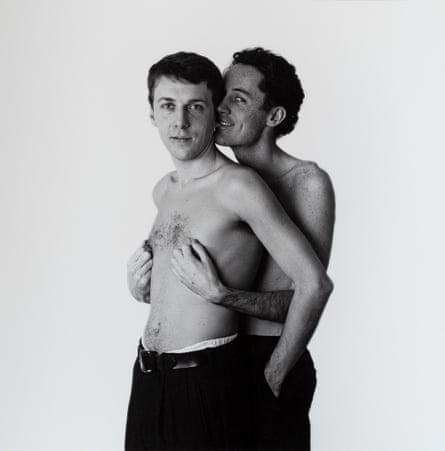
While many of Wood’s subjects are seen nude and wear fetish clothing, his portraits don’t feel pornographic or shocking. “There was nothing sexual about taking the actual photographs – you know, there was no orgy at the end of the session!” he jokes. “There are images of naked guys in various poses that are maybe quite erotic, but there are no erections or anything like that.” There is a deep sense of intimacy and a playfulness about them. Roberto and Andrew captures a couple embracing as one tickles the other’s nipples, while Stephen (1996/2026), the most striking photograph in the show, depicts a man in a leather jacket and underpants bending over to tie the lace of his boot, offering a view of his posterior in a pose that seems both vulnerable and powerful.
These images that explore masculinity, sex and power were a world away from Wood’s day-to-day working life in Glasgow. In the 1970s he worked in the sound department at BBC Scotland before spending the rest of his career as an engineer with British Telecom. Over the years he has taken on freelance commercial photography jobs but has never exhibited his work in a gallery setting, until now.
The catalyst for his debut solo show was the Scottish artist and researcher Steven Grainger, who was introduced to Wood as part of his research into gay artists in Glasgow in the 80s and 90s. When Grainger was first invited to Wood’s flat in January 2026, he wasn’t sure what to expect. “I thought I was going to look at holiday pictures, like photo albums or something,” he remembers. “But then John brought out an archive box and started showing me his photographs. I soon realised that there were about 20 archive boxes.”
The duo regularly meet up to chat. “We’ve become great friends,” Wood says, describing how Grainger made him consider returning to photography for the first time in years. And when an opening came up at Celine gallery – an artist-run space in Glasgow’s West End – Grainger seized the chance to curate an exhibition of Wood’s work, distilling hundreds of images into a final selection of nine.
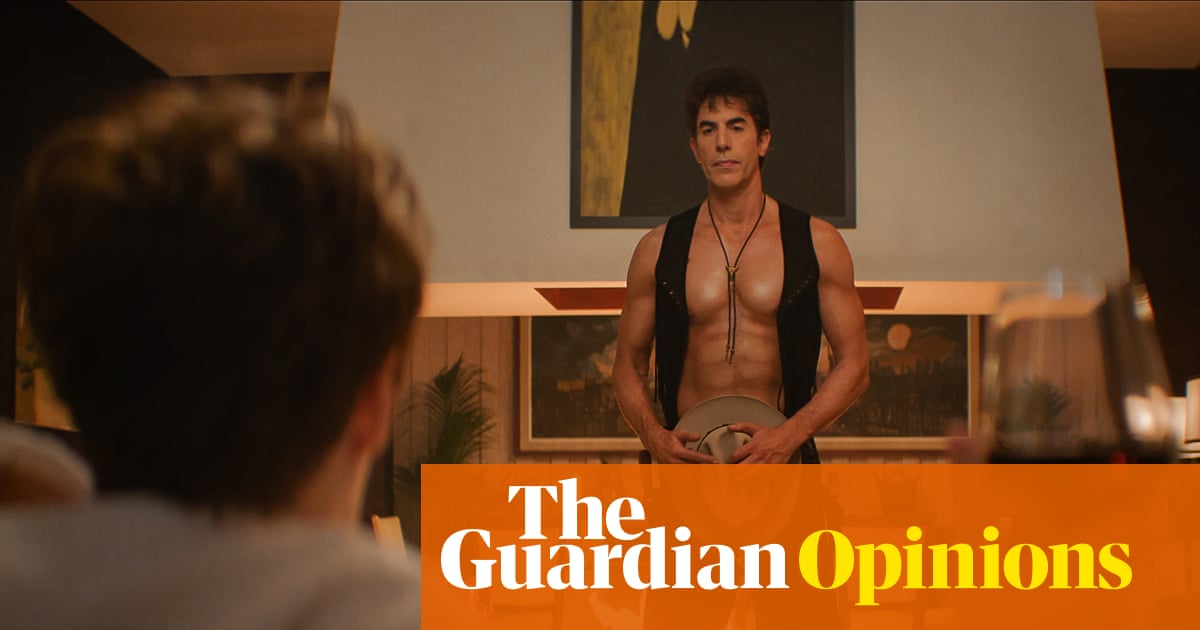
It’s important to think about the context the pictures were taken in. In the 2000s, when Grainger was newly out, gay men had started to take up more space in mainstream culture. But even as acceptance became more widespread, gay characters in TV shows and films were often desexualised. As Wood puts it: “They didn’t mind you being gay, but they didn’t want to know anything about it.” Now, with homoerotic hockey show Heated Rivalry hijacking the zeitgeist, and Alexander Skarsgård donning leather biker gear in the “sub-dom romcom” Pillion, mainstream culture is less squeamish about depictions of gay sex.
For Grainger, who grew up in the era of Section 28, his collaboration with Wood has been an education. “Had I known about John when I started art school,” he says, “I think my life would have been quite different.” Not only has he discovered the work of a gay artist who would otherwise have been totally unknown to him, he has also learned that, even in the shadow of the Aids crisis, there were gay men in Glasgow living full, interesting and sexual lives. Wood may be modest about his role in creating these images, but he is the one who saw the beauty in that and decided to capture it for posterity.
-
John Wood is at Celine, Glasgow, on Saturdays until 2 August






 English (US) ·