
 1 hour ago
2
1 hour ago
2
For most people, spending hours deep underground in darkness would seem an odd prescription for better health.
Yet every morning, a handful of Armenians descend 250 metres beneath the earth into an active salt mine where they spend six hours in cavernous chambers carved from rock salt, hoping the air below ground will help them breathe more easily.
“I tried every possible treatment, and this is the only thing that worked,” said Mikayel Torosian, an asthma sufferer visiting the clinic. “I thought it was complete rubbish before I tried it, but I am a true believer now. It saved me.”
Since its opening in 1987, patients have travelled to the Soviet-era mine for an alternative treatment known as speleotherapy based on the belief that the mine’s salt-saturated, allergen-free air can alleviate respiratory diseases.
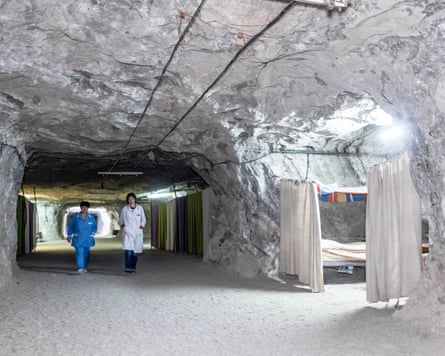
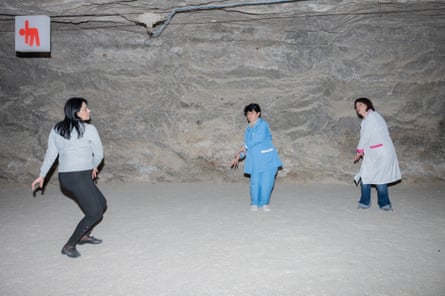
But the clinic, one of the world’s only hospitals in a deep salt mine, now hangs in the balance after Armenia withdrew state funding, raising broader questions about the state’s role in supporting alternative medicine.
The journey into the hospital begins with a rattling industrial lift that drops patients deep beneath a residential district on the outskirts of Yerevan. At the bottom, a maze of tunnels stretches through the rock. At first glance, the underground cavern looks more like a cold war bunker than a hospital. Behind curtains, patients nap on narrow beds. Others play billiards, pace around and perform breathing exercises or simply sit in silence, passing the hours in what might be one of the world’s most unusual medical facilities.
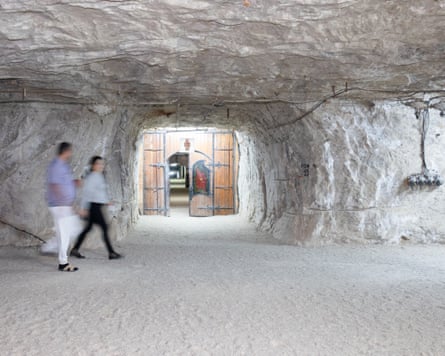
“It looks unusual, but after a few days, people begin to enjoy the peace,” said Anush Voskanyan, a doctor who has worked at the clinic since 1989, who guided visitors through the vast chambers.
Voskanyan said the idea to start the clinic emerged after doctors noticed that workers in salt mines appeared to suffer unusually low rates of respiratory illnesses despite spending their lives underground.
She said researchers began studying the mines’ microclimate, eventually leading to the creation of specialised underground clinics across parts of the Soviet bloc.
Voskanyan attributes the health benefits to a combination of factors: salt-rich air, year-round 19C temperatures and the absence of allergens, pollution, noise and radiation.
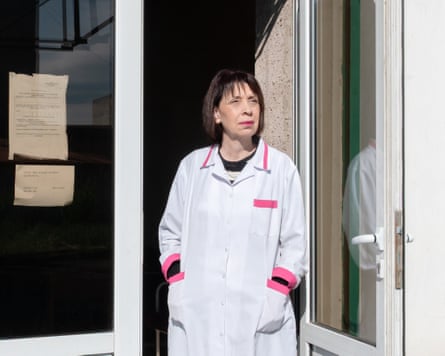
“This is the perfect climate to live in. You basically don’t age here,” she said.
Patients typically spend six hours a day underground over a three-week course of treatment. Doctors say the first week allows the body to adapt to the mine’s unique environment before the benefits gradually begin to accumulate.
At its peak, thousands of patients descended into the Avan mine every year, many receiving treatment free of charge through Armenia’s healthcare system.
“We used to admit 60 people at one time,” Voskanyan said, looking around largely empty chambers. “Today, there are probably five.”
The clinic’s fortunes changed in 2019 when the Armenian government withdrew state funding, arguing that speleotherapy lacked sufficient scientific evidence to justify public support. Patients who once attended free of charge now have to pay for each treatment session at a cost of about £20.
The decision came as Armenia began reforming its healthcare system and preparing for the introduction of universal health insurance, forcing officials to make difficult decisions about what treatments should be covered by the state.
“We’re on the brink of closing down,” Voskanyan said. “We’re still operating, but just barely, and could close any day.”
Voskanyan insists the treatment works, particularly for children suffering from asthma and allergies.
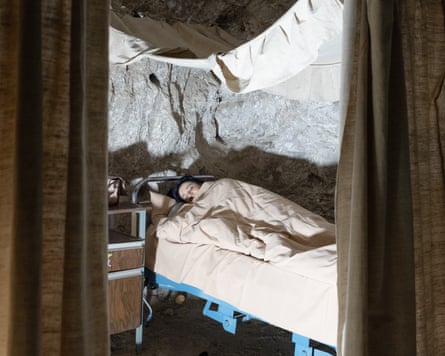
“There have even been cases where asthma attacks stopped completely after just one course of treatment,” she said.
While speleotherapy has been practised for decades across eastern Europe and the former Soviet Union, relatively few large-scale studies have been conducted and most clinics have since closed down. Many respiratory specialists view it as a complementary therapy that may ease symptoms but should not replace conventional medical treatment.
For supporters, however, the lack of definitive research does not negate decades of patient testimony. “If it didn’t help, I wouldn’t be coming back,” said Alvart Alihanyan, who has repeatedly returned to the clinic over the course of 10 years from Russia.
For now, each morning, the lift continues its descent beneath Yerevan. Whatever the debate over its medical benefits, the mine offers something increasingly rare above ground: hours of complete silence, no wifi and a brief escape from the noise of the outside world.







 English (US) ·