
 1 hour ago
3
1 hour ago
3
The violent hot red flames of deadly wildfires across the UK and Europe and scenes of panicked communities fleeing homes could not, at least geographically, be further away for Jan Harris.
But sitting in her new home at Reedy Swamp in rural New South Wales in Australia, the 67-year-old has found herself in tears.
“It is so heartbreaking for people,” she says. “They have such a hard road in front of them.”
For someone who lost her home to a wildfire, she knows this as well as anyone.
In the UK, experts have this week described the worst outbreak of wildfires ever recorded in the country. In north Wales, residents had to be evacuated from their homes. Wildfires have swept through parts of Spain, Portugal and France.
About 4o miles outside Paris, about 900 homes were evacuated as firefighters battled a blaze of “exceptional” scale in a Unesco-listed forest. Arson is suspected.
In Spain’s Andalucía fires, seven Britons were among the 13 dead.
Major fires are burning in the US and Canada and, like in Europe, they coincide with extreme heatwaves.
It’s a picture becoming all too familiar as the climate crisis extends and worsens fire seasons around the planet.
Prepare before the fire arrives
Harris can recall tiny details from Sunday 18 March 2018: how the clock on the TV news showed 12.34pm, the “unbelievable winds” and how her husband, John, not usually a man to insist on anything, said “we’re getting in the car … we just have to go babe” as a wall of flames and smoke charged towards their house. It was 38C (100F) that day.
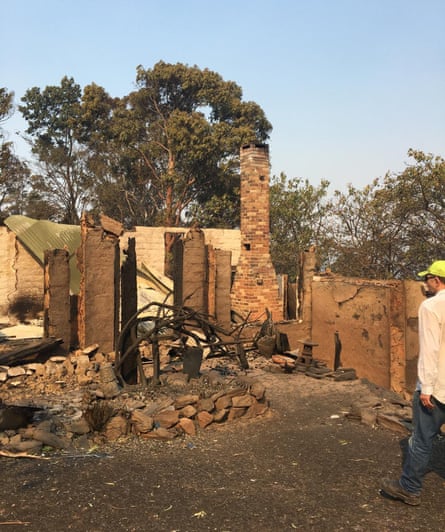
The Harris home wasn’t assessed for its ability to withstand fire, but they had done the usual things to prepare for fire.
Gutters were cleared of debris so flying embers were less likely to start fires on the roof; firefighting hoses were checked and working; an extra water tank was full and ready.
But the speed of the fire’s approach dismissed any thoughts of defending their home.
“It went from just a whiff of smoke to a wall in less than two minutes,” she says.
In hindsight, she says she should have had all of life’s important documents – birth and marriage certificates and passports – in one place.
After deciding to leave, Harris only dashed into one room of the house, the kitchen, and only to get her diabetic son Evan’s insulin supply.
Jan, John and Evan drove across a four-wheel drive track to the safety of a pub in town.
“We could see this chimney of black smoke. That was our house,” she says.
The house, and everything in it, was lost, as were 64 other homes and buildings later that day.
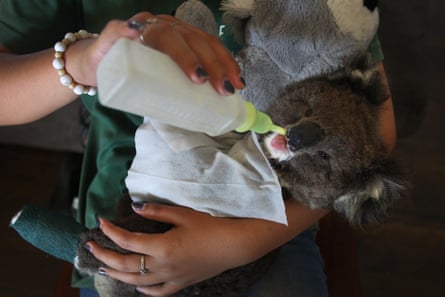
Two years later, while living in a rental property nearby, the Harrises evacuated twice during what became known as the black summer fires that claimed 33 lives, more than 3,000 homes and burned an area almost twice the size of England. Almost 3 billion native animals were killed or displaced.
Bushfires have always been a part of the Australian landscape. Aboriginal Australians used fire for thousands of years to manage the landscape.
Living with the threat of wildfires is routine, especially for people in rural areas.
Permanent road signs show that day’s fire risk, households have “bushfire survival plans” and public radio broadcasts alerts.
In the months before fire seasons, there are reminders to clear gutters of debris, prune overhanging branches, clear the space around the home of anything flammable and to check there’s a reliable water supply if the home has to be defended.
“Australia has some of the most bushfire-prone land in the world,” says Ben Shepherd, a superintendent at Fire and Rescue New South Wales.
“We have always pushed the view that this is about shared responsibilities. The public has to understand the risk and what they can do to alleviate it.”
That means, Shepherd said, preparing bushfire plans and discussing with the household at what stage will they decide to leave.
Daily bushfire warnings range from “no rating” to “catastrophic” – on those days, fire services say people should leave the area, preferably the night before.
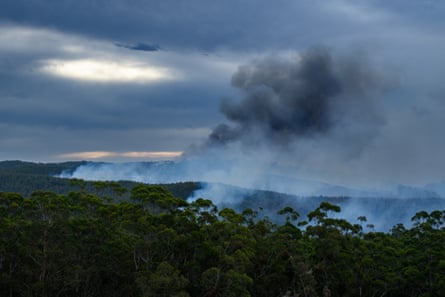
Australia’s expertise and experience in bushfires has meant its fire services have in recent years regularly shared personnel and equipment with the United States and Canada, and vice versa.
One of Australia’s large air tankers has been on the US west coast helping fight fires in recent weeks, and will be followed by almost 70 personnel next week.
“Around the world we are seeing conditions we haven’t seen before,” says Shepherd. “The more we all learn from each other, the better it is for us all around the globe.”
‘This has been predicted for decades’
Greg Mullins has been a firefighter for almost 40 years and spent 14 years as the commissioner of Fire and Rescue New South Wales.
He has been speaking on and off to European fire chiefs for more than two decades about the rising risk of wildfires and is “not surprised” at the scenes from the UK and Europe.
In 2004, he spoke to a fire science conference in Dublin about the need “for fire services in Europe to gear up for bushfires because of the impacts of climate change”.
“I was a bit of a lone voice at the time,” he says. “But everything was drying out. This is what has been predicted for decades. Heatwaves are priming the landscape for fire.
“Where they were used to seeing fires on the heathlands, they were starting to get forest fires. But all the equipment was aimed at fighting fires in structures.”
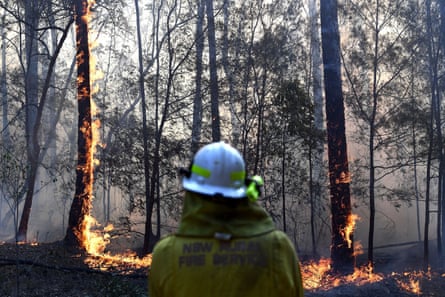
Fighting a fire in a forest or on hills is different to fighting a fire in an urban setting. A fire in a building will typically have a road for the fire truck and “there will be ready access to water”, Mullins says.
“On the moors and in a forest, that’s not the case. In a town, you know where the fire is – it’s at number 16 – but it can take hours to find a fire in a forest and by then it can be out of control.”
Routines and conventions learned over a century or more in Australia are being tested by hotter and more frequent fires.
Climate change has lengthened Australia’s fire season and has already seen an increase in the number of days where the risk of fire is high. It’s a familiar narrative around the world.
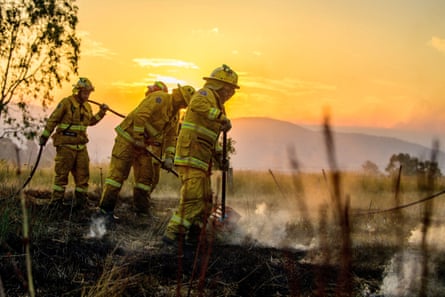
Dr Grant Williamson, a wildfire expert at the University of Tasmania, says there is “strong evidence that fire weather is increasing, globally, under human-driven climate change”.
“Fires are and will continue to burn hotter and this effect is particularly pronounced in temperate and Mediterranean climate zones,” he says.
“In terms of disastrous wildfires, fire disaster risk is greatest in affluent, heavily populated areas that include the western US, Australia and Mediterranean Europe, with a particularly sharp increase in the occurrence and impact of disasters after 2015 – 43% of the 200 most damaging wildfires occurred in the last decade.”
‘Another 10 minutes and we wouldn’t be alive’
Back in Reedy Swamp, the Harrises rebuilt on their plot of land with their insurance money. Unlike their last home, this one is bushfire rated. There is 50 metres of cleared area all around; there’s an extra water tank; no wood on the exterior of the home; gutters with guards to stop debris buildup; a firefighting pump and a wide passing area on their 500 metre drive.
“I would just leave though,” says Harris. “If we’d stayed another 10 minutes last time, we wouldn’t be alive.”
Harris has her own advice for people being threatened, perhaps for the first time, by wildfires.
“We often don’t spend enough time just sitting with what’s happened,” she says.
“It’s frightening and it’s heartbreaking. Yes it was financially difficult for us but we could navigate through that, but at huge emotional cost.
“If there’s psychological help, I would say take it. People say what you have lost are just things and that’s true – but they were my things.
“When an authority asks you to evacuate then, if we choose not to, are we then asking them to come and save us? That’s a really big ask.
“As much as I am mournful for what we have lost, I am pretty happy to be here.”







 English (US) ·