
 13 hours ago
10
13 hours ago
10
After scoring the goal that secured Argentina’s place in the World Cup final, Lautaro Martínez burst into convulsive sobs during the touchline interview. He spoke of the first pair of trainers his father bought him and of how his mother kept making his bed when he moved to a club pension house in another city as a teenager. Every single day. Martínez said that mattered to him more than any goal, any cup.
Argentina’s head coach, Lionel Scaloni, said he was a bit worried after England’s goal but never stopped believing in his players. “They grew up in environments where they were afraid of nothing, in which they’ve always been the best at what they do,” he said. “As small children they competed and everyone expected so much of them; responsibility doesn’t weigh them down.”
Scaloni said that on the pitch they play like eight- or nine-year-olds. “They’re not thinking: ‘We’re about to lose a semi-final.’ They’re thinking about playing football, which is what they’ve done all their lives.” He regards the players as wild, unruly and spontaneous. Fighters, men of honour. With deliriously high expectations placed on the squad, the management team advocate for the love of play and the childlike qualities of relating to the ball.
The Nobel prize-winning economist Simon Kuznets said there were four types of countries: developed, underdeveloped, Japan and Argentina. Not fitting easily into a type, especially in our binary times when complexity and nuance have become increasingly alien to our processing abilities, is characteristic of Argentina and its people.
There is a meme doing the rounds that says: “To kick the Spanish out, first we had kick out the British. History is cyclical and repeats itself.” The image is of battles of independence more than two centuries ago, and the reference is to two British military incursions met with enough resistance to stop them. We learn about the British invasions in primary school in Argentina but I have never met a Briton who has heard of them.

The fact that Argentina is a soil of anticolonial struggle appears to surprise observers from the northern hemisphere, who point to the European ancestry of much of the population. Throughout the 20th century many footballers used this European heritage to claim nationalities which allowed them to play for big European clubs. Before the Bosman ruling, that was pretty much the only way to secure a lucrative gig in the big leagues.
Since breaking ties with the Spanish crown in 1810 and 1825, the republic has welcomed all peoples of the world. An Argentinian could have a Guaraní mother and an eastern European father. Nazis fled here after the war, and one of the biggest Jewish communities outside Israel continues to track them down. Carlos Menem, the son of Syrian immigrants, gave the go-ahead for the construction of Latin America’s biggest mosque when he was Argentina’s president. Evangelical preachers can be found in every nook and cranny of the vast territory.
Indigenous people conduct daily struggles to win back rights and land taken from them and Argentinian Afro-descendants have taken to social media with all their might to make their voices heard. Russians and Africans are the newest migratory waves to be welcomed, and Venezuelans have joined the long line of neighbouring South American incomers. Japanese-Peruvian fusion restaurants, Chinatown and Ukrainian cuisine are to be found.
Argentina is a diverse and open society. This is not to say everyone lives happily in some idyllic conflict-free way. It is as polarised, classist, prejudiced and unequal as other countries.
The one thing that has provided a unified sense of national identity, whatever that may mean, is football. We love football as an art form, an escape. We are good at football. We export players and managers on a par with grain and meat. The poorest children in the vacant lots play keepy-uppy with anything they can find, perfecting skills in reduced spaces, while the tradition of child and adolescent development is of an excellence to match any other.
Daniel Passarella, captain of the 1978 World Cup-winning side, once told me that in most areas of human endeavour, Argentina always wanted to be one of the big nations but was regarded as a lesser. “Football is the one thing we can shake hands with any opponent, look them in the eye, and know they see you as an equal,” he said.
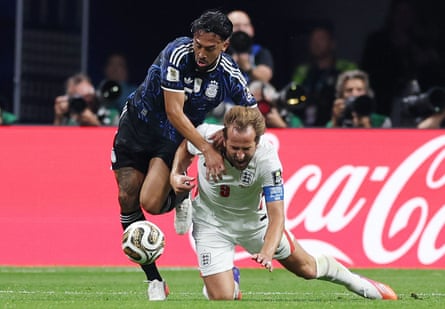
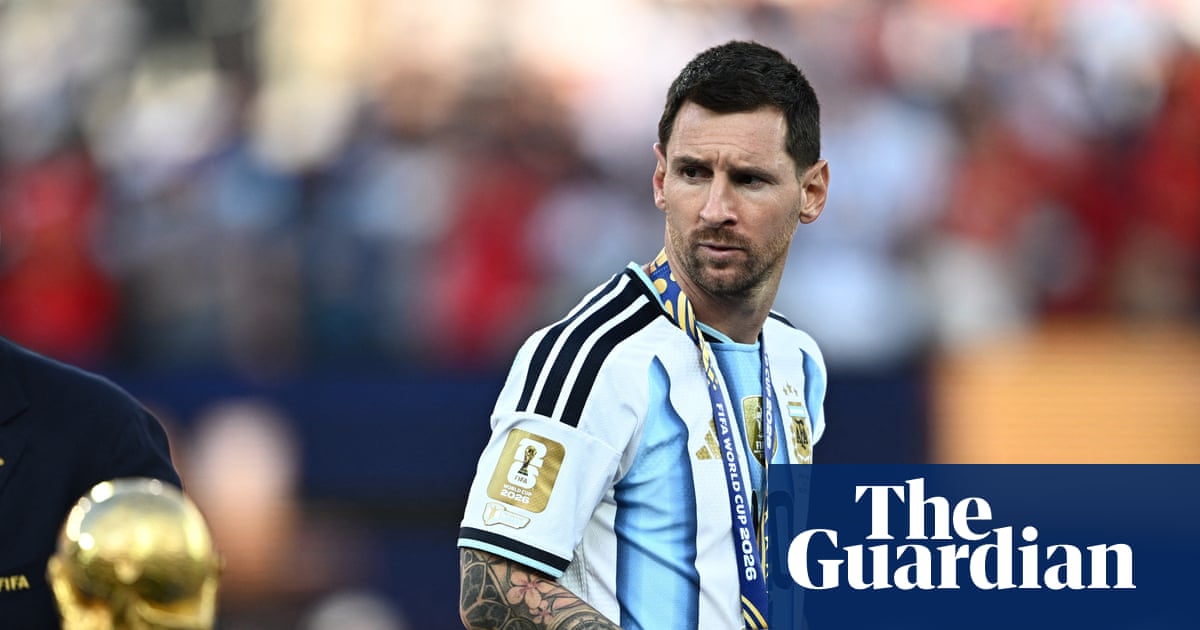
At this World Cup, Argentina’s proximity to Fifa and Donald Trump makes the idea of avenging underdogs quite a stretch. Messi mania is a marketing success without precedent, the football association’s financial activities are being examined by the FBI, and outside Argentina the squad is the least simpático of all. Criticism is pouring in from intellectual literary publications and rightwing sensationalist streamers alike.
But Argentinians are emboldened by this, turning to developments on the pitch as a valid response. We will surrender to Messi magic, allow our emotions to flow with every spin of the ball, becoming believers in the sacred power of the circle. For the duration of the game. Then, we return to reality with no expectation that anything will be different.
The Brazilian poet Sérgio Vaz wrote: “One doesn’t watch football, one feels it.” It is the contentment football can provide, even in the suffering; the pain, the tears and the fear. The emotions are so real, visibly shared. We feel, and we are not alone. It means we’re alive.





 English (US) ·